
How to Sleep After a Hair Transplant: Protect Your Grafts and Reduce Swelling
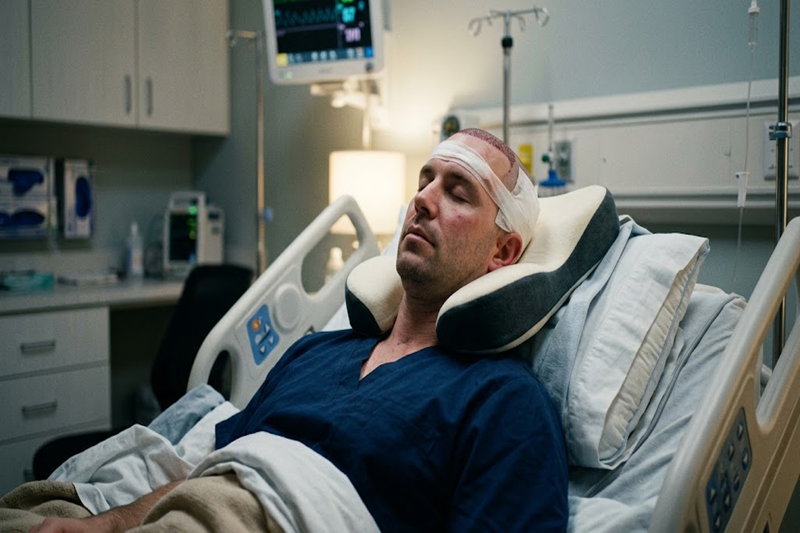
Knowing how to sleep after a hair transplant can help protect newly placed grafts and reduce early swelling. The right sleeping position matters, especially during the first few nights of recovery.
In this guide, you’ll learn how to sleep at a 45-degree angle, reduce swelling, protect your grafts, and safely return to your normal sleeping position after a hair transplant.
How Should You Sleep After a Hair Transplant?
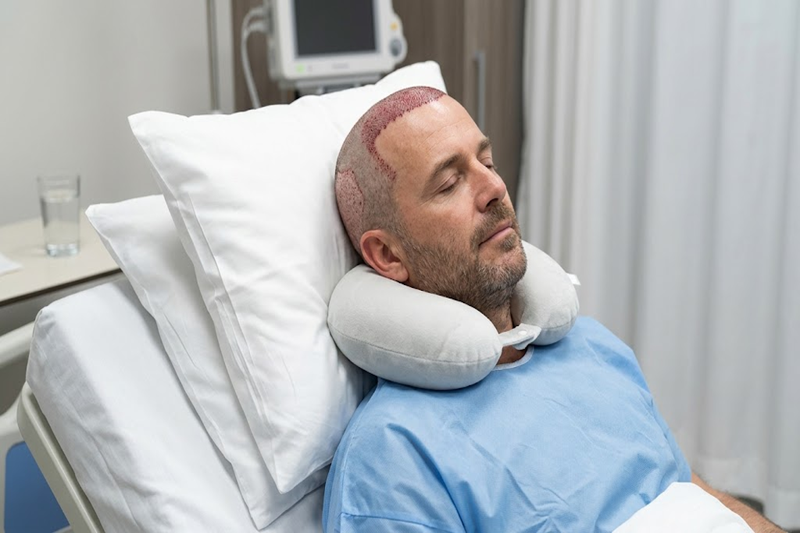
During the first few nights, sleeping on your back with your upper body elevated is commonly recommended. A 45-degree angle can help keep the head elevated without requiring you to sleep completely upright.
You can use:
- A wedge pillow
- Several supportive pillows
- An adjustable bed
- A neck pillow to help stabilize your head
The goal is to avoid putting direct pressure or friction on the transplanted area. Your surgeon may recommend a specific position based on where your grafts were placed.
The International Society of Hair Restoration Surgery (ISHRS) notes that patients may be advised to sleep in a semi-upright position for the first two to three days to help minimize swelling and bruising.
Not sure where to start?
Our specialists will assess your scalp biology, graft capacity, and aesthetic goals to create a hair restoration protocol designed entirely for you — from your first consultation onward.
Why Sleep at a 45-Degree Angle After a Hair Transplant?
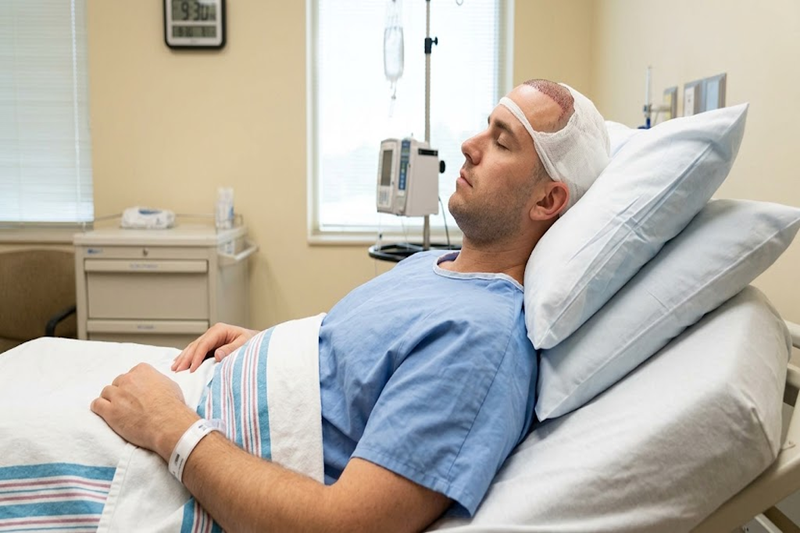
Keeping your head elevated can be useful during the early recovery period because swelling may develop around the forehead and face after hair transplant surgery.
Instead of lying completely flat, an elevated position uses gravity to help limit fluid accumulation in the upper face. This can make swelling more manageable, particularly during the first few days.
You do not need to force yourself into an uncomfortable upright position. A stable, supported elevation is generally more practical for sleeping.
How to Reduce Swelling While Sleeping
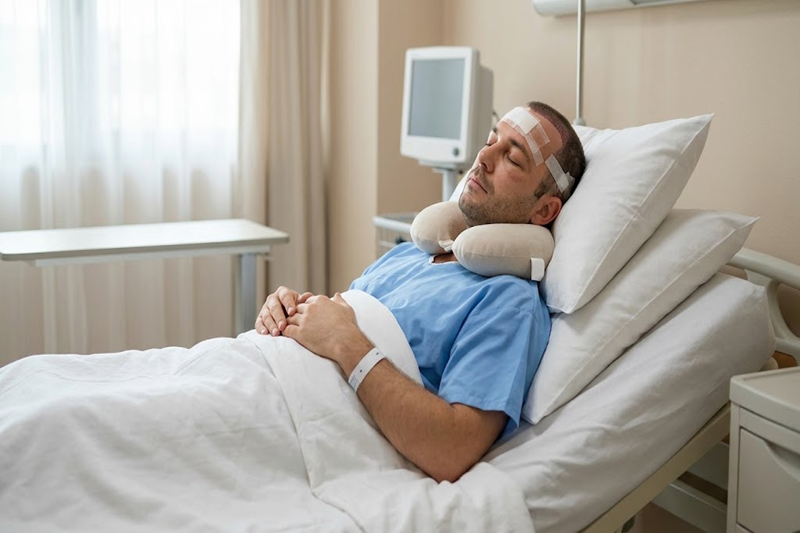
Swelling after a hair transplant is usually temporary. It can sometimes move from the scalp toward the forehead or around the eyes during the first several days.
To make this period more comfortable:
Keep Your Head Elevated
Use a wedge pillow or another comfortable support to maintain elevation while sleeping and resting.
Avoid Pressure on the Treated Area
Do not rest the transplanted area directly against the pillow. Avoid sleeping face down or in positions that place unnecessary pressure on the recipient area.
Follow Your Surgeon’s Instructions
Your clinic may provide specific recommendations for cold compresses, medications, washing, and sleeping. These instructions should take priority because postoperative protocols can differ between patients.
If your surgeon recommends a cold compress, follow their instructions regarding where and how to apply it. Do not place ice directly on newly transplanted grafts.
How to Protect Hair Grafts While Sleeping
Newly transplanted grafts need protection from unnecessary friction, pressure, and manipulation during the early healing period.
Follow these basic graft safety rules:
- Sleep in the position recommended by your surgeon.
- Avoid direct pressure on the recipient area.
- Do not scratch, rub, or pick at the transplanted scalp.
- Avoid sleeping face down during the early recovery period.
- Use a clean, soft pillowcase.
- Avoid tight hats or headwear unless your surgeon has approved them.
- Follow your clinic’s instructions for washing and scalp care.
- Do not attempt to remove scabs or crusts prematurely.
A hair transplant involves moving individual grafts from a donor area to areas affected by hair loss. Like any surgical procedure, it requires a period of healing, and following postoperative instructions can help protect the treatment area.
How Many Days After Hair Transplant Can I Sleep Normally?
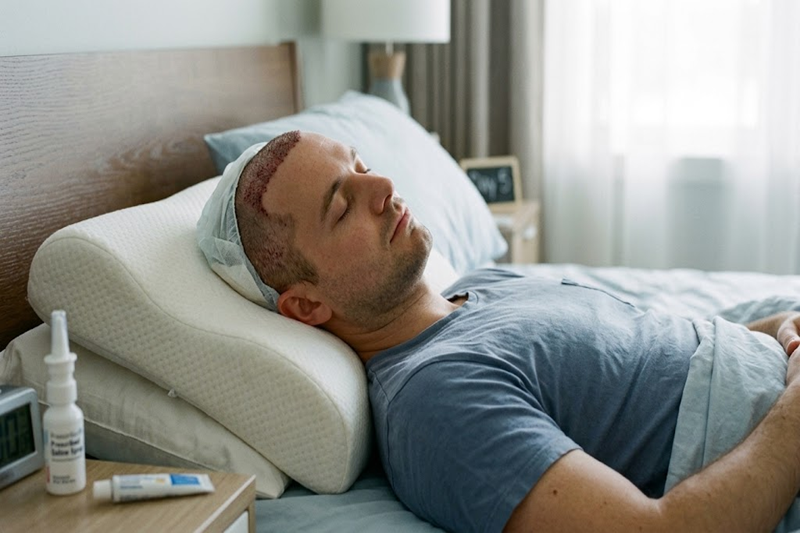
How many days after hair transplant can i sleep normally? There is no single number of days that applies to every patient.
Many postoperative protocols place particular emphasis on protecting the grafts and keeping the head elevated during the first few days. After that initial period, patients can generally begin returning gradually to their usual sleeping habits according to their surgeon’s instructions.
The timing can depend on:
- The transplant technique
- The location of the grafts
- The number of grafts transplanted
- How the scalp is healing
- Your surgeon’s specific aftercare protocol
For this reason, do not assume that you should return to side or stomach sleeping on a specific day simply because your scalp feels more comfortable.
Your surgeon can confirm when it is safe to resume your usual sleeping position.
When Can You Sleep on Your Side After a Hair Transplant?
If you normally sleep on your side, you may be eager to return to your usual position after surgery. However, side sleeping can create contact between the pillow and areas of the scalp that are still healing.
During the early recovery period, sleeping on your back with your head elevated may provide better protection for the recipient area.
Once your surgeon confirms that the grafts are sufficiently secure, you can gradually return to side sleeping.
How to Make Sleeping More Comfortable After a Hair Transplant
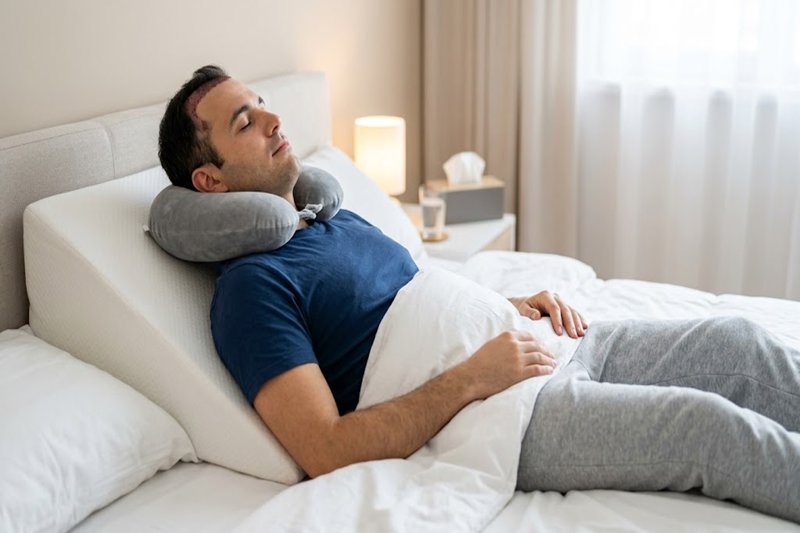
Changing your normal sleeping position can be uncomfortable, especially if you usually sleep on your side or stomach.
A few simple adjustments can make the first nights easier.
Use a Wedge Pillow
A wedge pillow can provide more stable elevation than several soft pillows and may help you maintain your position throughout the night.
Support Your Neck
A small neck or travel pillow can provide additional support and reduce unnecessary head movement without placing pressure directly on the transplanted area.
Keep Your Sleeping Area Clean
Use a clean pillowcase and keep the sleeping area free from anything that could accidentally rub against your scalp.
Settle Into Position Before Sleeping
Take a few minutes to find a comfortable position before falling asleep. This can reduce the need to repeatedly adjust your head during the night.
What Should You Avoid While Sleeping After a Hair Transplant?
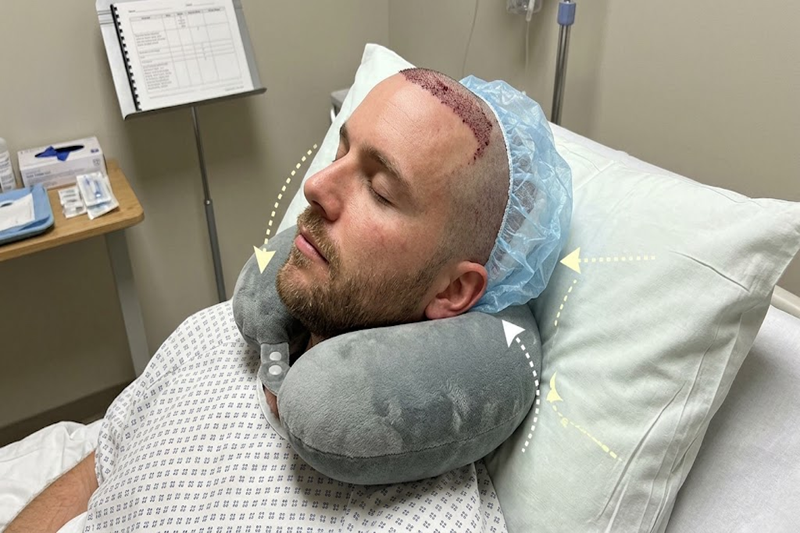
During the early healing period, avoid habits that could cause unnecessary pressure, friction, or irritation.
These include:
- Sleeping directly on the transplanted area
- Sleeping face down
- Scratching or rubbing the scalp
- Picking at scabs or crusts
- Using rough or unclean bedding
- Wearing tight headwear without medical approval
- Applying pressure to the recipient area
If you accidentally touch your scalp while sleeping, do not panic. A brief accidental contact does not necessarily mean that a graft has been damaged. Avoid further manipulation and contact your clinic if you notice bleeding or other unusual symptoms.
When Should You Contact Your Hair Transplant Surgeon?
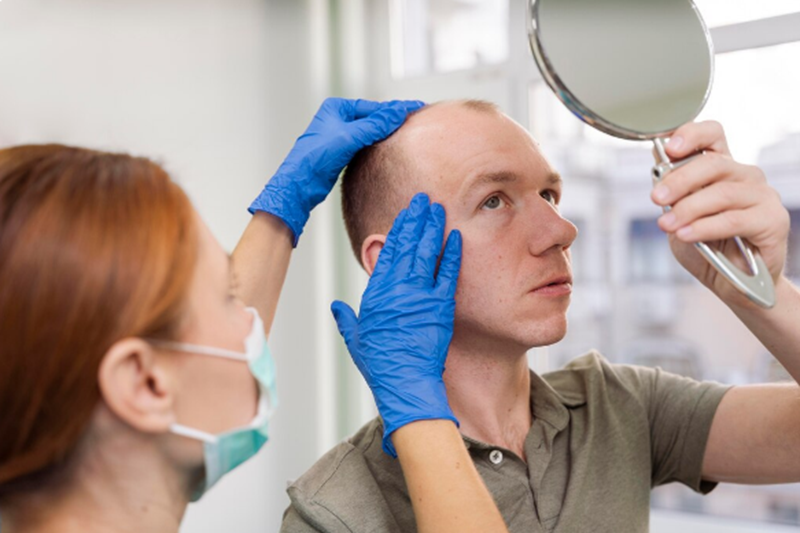
Some swelling, tightness, tenderness, itching, and crusting can occur during normal recovery after a hair transplant.
However, contact your hair transplant clinic if you develop symptoms that are severe, unexpected, or getting worse.
These may include:
- Persistent or significant bleeding
- Severe or worsening pain
- Increasing redness or warmth
- Pus or unusual discharge
- Fever
- Significant swelling that does not improve
- Other symptoms that concern you
Your surgical team can assess your scalp and determine whether additional care is necessary.
Not sure where to start?
Our specialists will assess your scalp biology, graft capacity, and aesthetic goals to create a hair restoration protocol designed entirely for you — from your first consultation onward.
Frequently Asked Questions
How should I sleep after a hair transplant?
Sleep on your back with your head elevated, usually at around a 45-degree angle, during the first few nights. Avoid direct pressure on the transplanted area.
How many days after hair transplant can I sleep normally?
The timeline varies by patient and procedure. Your surgeon can tell you when it is safe to return to your usual sleeping position.
Can I sleep on my side after a hair transplant?
Side sleeping may be possible after the initial healing period, but wait until your surgeon confirms that it is safe.
Does sleeping position affect hair transplant grafts?
Yes. Excessive pressure, rubbing, or scratching can irritate the healing scalp, so protecting the grafts during the early recovery period is important.
Final Thought
Knowing how to sleep after a hair transplant can make the early recovery period more comfortable while helping you avoid unnecessary pressure or friction around the transplanted area.
Sleeping on your back with your head elevated, often around a 45-degree angle, is commonly recommended during the first few nights. Keeping the recipient area protected and following your surgeon’s specific aftercare instructions are also important.
There is no universal date for returning to your normal sleeping position. Your surgeon should determine when you can safely resume side or stomach sleeping based on your procedure and healing progress.
The safest approach is to prioritize your clinic’s individualized postoperative instructions over a fixed timeline found online.
Related Articles
Continue exploring clinical insights from the Helia Medical Journal.
 Hair Restoration & Hair Transplant
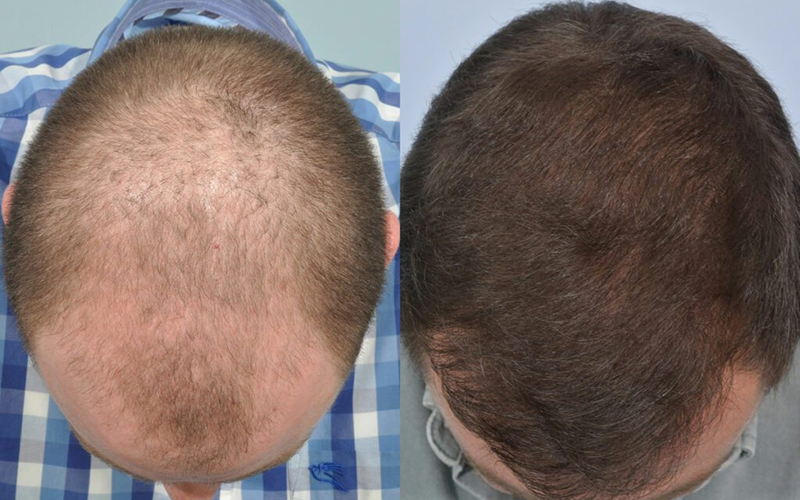
Do Hair Transplants Last Forever? Which Method Lasts Longest?
Table of ContentsDo Hair Transplants Last Forever?Which Hair Transplant Method Lasts the Longest?FUE Hair TransplantFUT Hair TransplantDoes FUE Hair Transplant Last Forever?Do Hair Plugs Last Forever?What Can Affect…
 Hair Restoration & Hair Transplant
Hair Transplant Expectations: What’s Real and What’s Not?
Table of ContentsWhat Can You Realistically Expect From a Hair Transplant?Hair Transplant Expectations: Myth vs. RealityMyth 1: A Hair Transplant Guarantees a Full Head of HairMyth 2: Results…
 Hair Restoration & Hair Transplant
Wearing Hat After Hair Transplant: When Is It Safe?
Table of ContentsCan You Wear a Hat After Hair Transplant?Timeline for Wearing HatsWhat Type of Hat Is Best After a Hair Transplant?Can Wearing a Hat Dislodge Hair Transplant…
Comments
Share your questions or clinical experience with our readers.