Skin Tag Removal in Dubai
Skin tags are small, soft growths that commonly develop in areas where the skin rubs against itself or clothing. They are usually harmless but can become uncomfortable or irritated when they catch on jewellery or interfere with shaving.
Skin Tag Removal in Dubai involves choosing an appropriate removal method based on the size, location, and characteristics of each growth. A confirmed diagnosis and an individualised treatment plan help distinguish skin tags from other skin lesions and determine a suitable removal approach.
What Are Skin Tags?
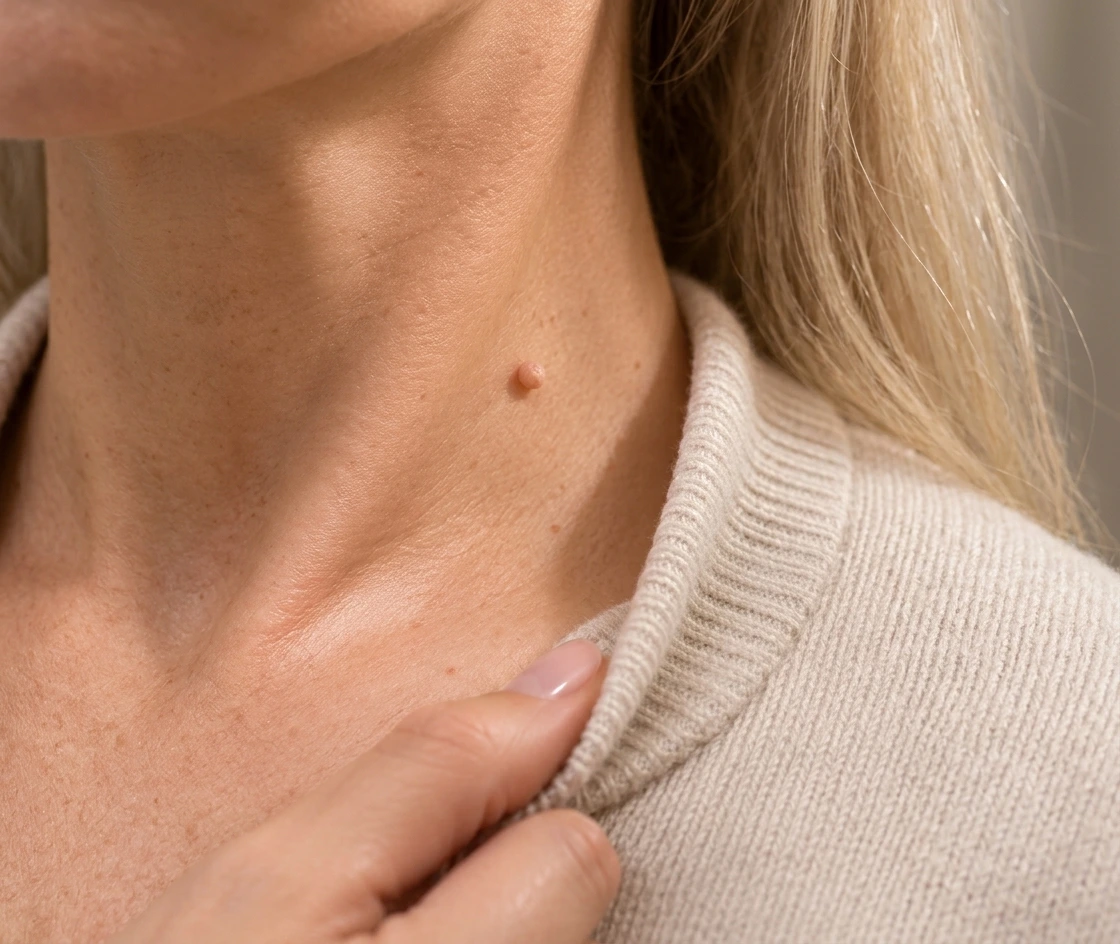
Skin tags, medically known as acrochordons, are small, non-cancerous growths made up of skin and supporting tissue. They usually appear as soft, flesh-coloured or slightly darker bumps attached to the skin by a narrow stalk.
Common characteristics include:
- Soft, smooth, or slightly wrinkled surfaces.
- Small, flesh-coloured or brown growths.
- A rounded shape attached by a narrow base.
- Usually painless growths that may become irritated by friction.
Skin tags are not contagious and generally do not require removal unless they cause discomfort or cosmetic concerns.
What Causes Skin Tags?
The exact cause of skin tags is not fully understood, but several factors are associated with their development:
- Skin friction: Repeated rubbing between skin folds or against clothing may contribute to skin tag formation.
- Age: Skin tags become more common with age.
- Genetic factors: Some individuals may have a family tendency to develop these growths.
- Hormonal changes: Pregnancy and other hormonal fluctuations may be associated with an increased occurrence.
- Insulin resistance: Skin tags are sometimes associated with insulin resistance and metabolic conditions.
Having skin tags does not necessarily indicate an underlying health problem.
Where Do Skin Tags Commonly Appear?
Skin tags can develop in different areas, particularly where friction or skin folds are present.
Neck
Skin tags on the neck may catch on necklaces, collars, and clothing, causing repeated irritation.
Underarms
Repeated skin contact and friction can contribute to growths in the armpits. Shaving may also irritate these areas.
Eyelids
Small growths around the eyelids may cause discomfort or interfere with daily activities. Removal in this sensitive area requires particular care.
Groin and Inner Thighs
Skin tags may form around the groin and inner thighs, where moisture and friction are common.
Beneath the Breasts
Skin folds beneath the breasts can create conditions in which skin tags develop and become irritated by clothing or movement.
Skin Tag Removal Methods in Dubai
The appropriate removal method depends on the growth's size, location, attachment, and clinical assessment.
Cryotherapy
Cryotherapy uses controlled freezing, usually with liquid nitrogen, to destroy the targeted tissue. The treated area may blister or form a small scab before the growth falls away.
Electrocautery
Electrocautery uses controlled electrical heat to remove or destroy the skin tag. Local anaesthesia may be used when appropriate.
Surgical Excision
Surgical excision involves cutting away the skin tag using sterile instruments. It may be suitable for larger growths or lesions that require further examination.
Laser Removal
Certain laser techniques use concentrated light energy to target and remove unwanted tissue. Their suitability depends on the size, location, and characteristics of the growth.
Not every method is appropriate for every skin tag. A clinical assessment helps determine the suitable approach and whether further examination is necessary before removal.
How Is a Skin Tag Removal Plan Developed?
A personalised removal plan involves three main steps:
1. Skin Examination and Diagnosis
The practitioner examines the growth's appearance, size, location, and any changes in shape or colour. If the diagnosis is uncertain, further assessment or a biopsy may be recommended.
2. Removal Method Selection
The method is selected according to the growth's characteristics, skin type, location, and medical history. The need for local anaesthesia or additional examination is also considered.
3. Treatment Planning and Follow-Up
The number of growths, selected removal method, and expected healing time help determine the treatment schedule. Follow-up may be recommended to assess healing or discuss any remaining lesions.
Who Is a Suitable Candidate for Skin Tag Removal?
People with confirmed skin tags who experience irritation, discomfort, or cosmetic concerns may consider removal.
An assessment may be appropriate for individuals who:
- Have growths that catch on clothing or jewellery.
- Experience repeated irritation or minor bleeding.
- Have skin tags that interfere with shaving or daily activities.
- Want to remove visible growths for cosmetic reasons.
- Have multiple skin tags in areas affected by friction.
Treatment suitability depends on the individual's skin condition, medical history, and selected removal method.
What to Expect During a Skin Tag Removal Appointment
An appointment generally begins with an examination of the growths and a review of medical history and removal preferences. The practitioner explains the selected method and any preparation required.
Appointments typically take 20 to 60 minutes, depending on the removal technique, number of skin tags, and treatment area.
Local anaesthesia may be used to improve comfort, depending on the method and location. Some procedures involve a brief removal process, while others require additional preparation and aftercare instructions.
Is Skin Tag Removal Safe?
Skin tag removal is generally straightforward when performed using an appropriate technique after a confirmed diagnosis. However, possible side effects depend on the method and treatment area.
These may include:
- Temporary redness, swelling, or tenderness.
- Minor bleeding or scabbing.
- Temporary changes in skin colour.
- Infection if the treated area is not properly cared for.
- Scarring, particularly after deeper removal techniques.
An uncertain diagnosis, active infection, or contraindication to the selected method may make removal unsuitable until further assessment. Growths that change rapidly, bleed without an obvious reason, or have unusual colours or shapes should be evaluated before cosmetic removal.
Skin Tag Removal Results and Recovery
Once a skin tag is successfully removed, it does not usually grow back in the same spot. However, new skin tags can develop in other areas over time.
Healing depends on the removal method, growth size, and treatment location. Recovery may range from 0 to 14 days, depending on the intervention. Some methods involve minimal downtime, while others may require several days for scabbing and skin healing.
A universal success percentage has not been established, as outcomes depend on the removal technique, lesion characteristics, and individual healing response.
Aftercare Following Skin Tag Removal
Proper aftercare helps protect the treated area and support healing.
- Keep the area clean and follow the provided wound-care instructions.
- Avoid picking at scabs or rubbing the treated skin.
- Keep the area dry when advised, particularly during the initial healing period.
- Avoid applying irritating skincare products directly to the treated area.
- Protect exposed healing skin from direct sunlight.
- Avoid shaving over the treated area until it has healed.
- Contact a healthcare professional if increasing redness, swelling, pain, or discharge develops.
Aftercare instructions may vary depending on the removal method and treatment location.
Skin Tag Removal Cost in Dubai
The cost of Skin Tag Removal in Dubai depends on several factors:
- Number and size of skin tags.
- Location of the growths.
- Removal method selected.
- Complexity of the procedure.
- Whether additional examination or follow-up is required.
Treatment is individualised, and some individuals may require multiple visits, particularly when several growths need to be removed or assessed separately.
A consultation helps confirm the diagnosis, determine the appropriate removal method, and provide a personalised cost estimate.
Frequently Asked Questions
Do skin tags grow back after removal?
A successfully removed skin tag usually does not return in the same location. However, new skin tags may develop elsewhere, particularly in areas prone to friction.
Can I remove a skin tag at home?
Home removal is not recommended. Cutting, tying, or applying unregulated removal products can cause bleeding, infection, and scarring. A growth that resembles a skin tag may also be another type of skin lesion.
Does skin tag removal leave a scar?
Scarring depends on the removal method, growth size, location, and individual healing response. Smaller growths may heal with minimal visible marks, but changes in skin colour or scarring can occur.
Book Your Skin Tag Removal in Dubai Consultation
Skin tags are usually harmless, but they can become uncomfortable or affect confidence when they appear in visible or friction-prone areas. A proper assessment helps confirm the diagnosis and identify a suitable removal approach.
Contact Helia Clinic to learn more about Skin Tag Removal in Dubai and arrange a consultation.