
FUE Hair Transplant in Dubai
Sapphire FUE • Micro FUE • 14+ Years Experience
Sapphire FUE and Micro FUE options planned around your hair loss pattern, donor hair, and restoration goals.
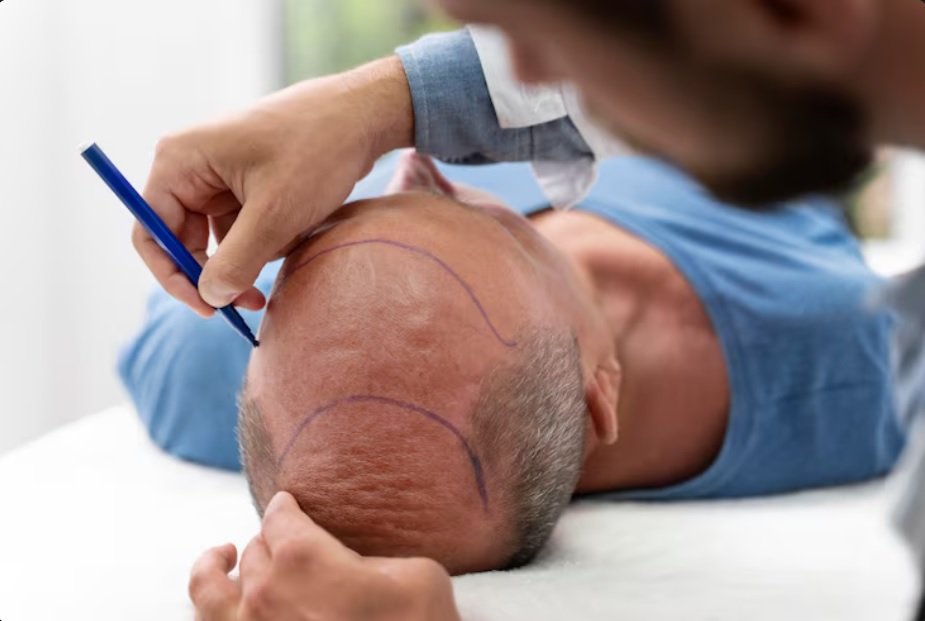
FUE hair transplant is a minimally invasive hair restoration technique that moves individual hair follicles from the donor area to areas affected by hair loss. At Helia Clinic, we offer Sapphire FUE and Micro FUE based on your hair loss pattern, donor hair, and restoration goals.
With more than 14 years of experience, our team focuses on careful planning, natural hairline design, and precise graft placement to achieve balanced and natural-looking results.
What Is FUE Hair Transplant?
FUE, or Follicular Unit Extraction, involves removing individual follicular units from the donor area and placing them in areas with thinning or hair loss.
Unlike FUT, FUE does not require removing a strip of scalp. Instead, follicles are extracted individually, allowing the treatment to be planned around the patient's existing hair and donor supply.
FUE hair restoration can be used for:
- Receding hairlines
- Frontal hair thinning
- Crown thinning
- Localized bald areas
- Reduced hair density
- Hairline restoration
The number of grafts required depends on the extent of hair loss, donor hair availability, and the density you want to achieve.
Sapphire FUE Hair Transplant in Dubai
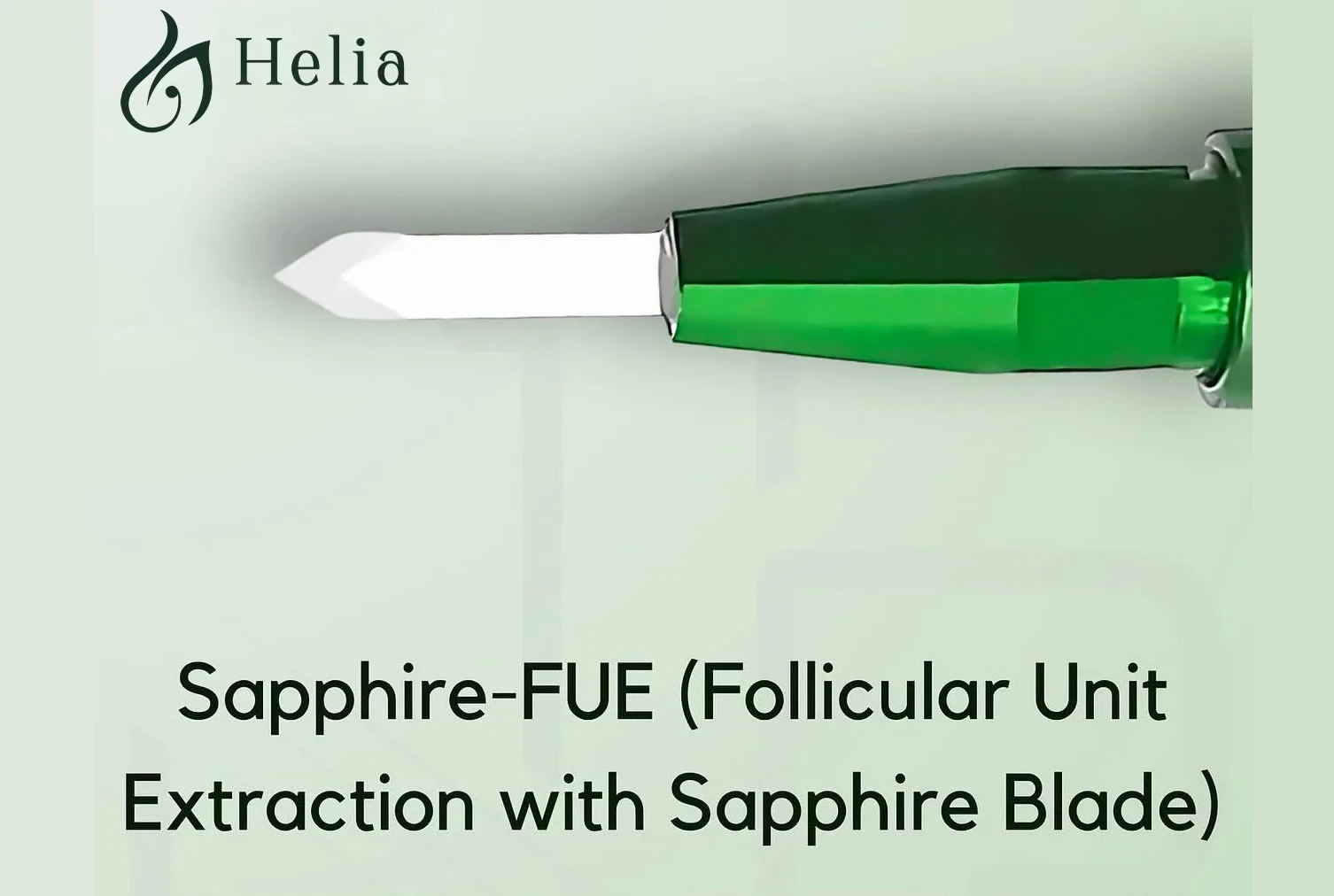
Sapphire FUE is an FUE hair restoration technique that uses sapphire blades to create the recipient channels where the extracted grafts will be placed.
The channels help determine the direction, angle, and distribution of the transplanted follicles. Careful planning is particularly important when restoring the hairline, where the placement of each graft can affect the overall appearance.
Sapphire FUE may be considered for patients looking to restore:
- A receding hairline
- Frontal hair density
- Crown areas
- Localized thinning
- Overall hair density
The appropriate graft number and treatment plan are determined during your consultation.
Micro FUE Hair Transplant in Dubai
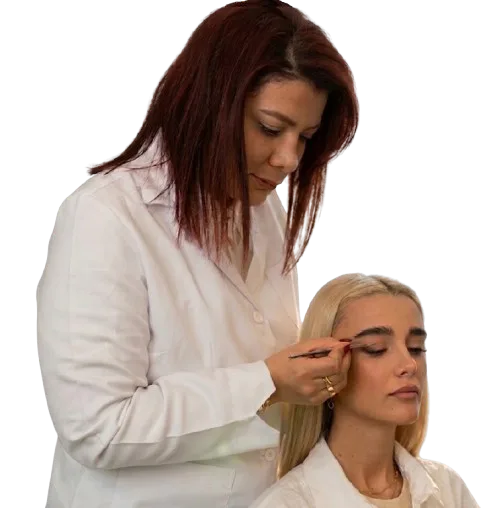
Micro FUE focuses on the precise extraction and handling of individual follicular units. The technique can be used to restore areas with thinning hair while taking the available donor supply into consideration.
Micro FUE may be suitable for:
- Hairline restoration
- Small areas of thinning
- Crown restoration
- Localized hair loss
- Improving overall hair density
Your treatment plan is based on your hair loss pattern, donor area, existing hair, and the number of grafts needed for the intended result.
Not sure where to start?
Our specialists will assess your scalp biology, graft capacity, and aesthetic goals to create a hair restoration protocol designed entirely for you — from your first consultation onward.
Sapphire FUE vs Micro FUE: What Is the Difference?
Both techniques are based on FUE and involve the extraction of individual follicular units. The main difference is where each technique places its focus.
| Sapphire FUE | Micro FUE |
|---|---|
| Uses sapphire blades to create recipient channels | Focuses on precise follicular extraction and handling |
| Channel design helps control graft direction and angle | Emphasizes careful handling of individual grafts |
| Can be used for hairline, crown, and density restoration | Can be used for hairline, crown, and localized thinning |
| Treatment is planned according to individual needs | Treatment is planned according to individual needs |
Neither technique is automatically better for every patient. The right approach depends on factors such as your donor hair, pattern of hair loss, treatment area, and restoration goals.
How Does an FUE Hair Transplant Work?
Your treatment begins with an assessment of your hair and scalp. The team then develops a treatment plan based on the areas that need restoration and the available donor hair.
The procedure generally includes:
1. Hair and scalp assessment
Your hair loss pattern and donor area are evaluated.
2. Hairline and treatment planning
The areas requiring restoration and the desired hairline are planned.
3. Donor area preparation
The donor area is prepared for follicular extraction.
4. Follicular extraction
Individual follicular units are carefully removed from the donor area.
5. Graft preparation
The extracted grafts are prepared for implantation.
6. Recipient area preparation
The recipient sites are created according to the planned hair direction and distribution.
7. Graft implantation
The prepared follicles are placed into the recipient areas.
8. Aftercare
You receive instructions for protecting the transplanted area and supporting the recovery process.
Who Is a Good Candidate for FUE Hair Transplant?
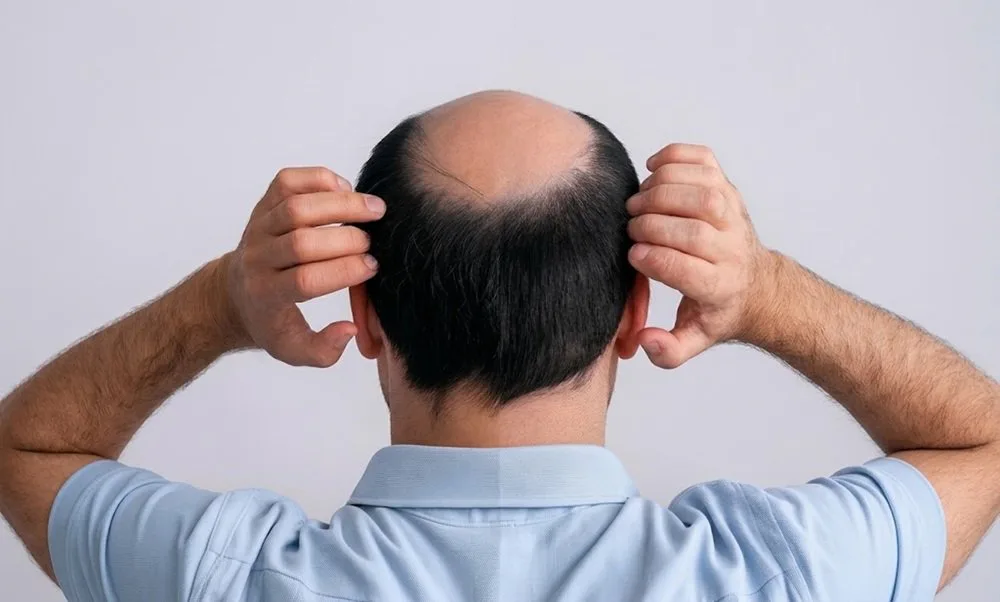
FUE may be an option for adults experiencing different patterns of hair loss, provided they have sufficient donor hair for transplantation.
You may be considered for FUE if you have:
- A receding hairline
- Male or female pattern hair loss
- Thinning around the crown
- Localized bald spots
- Reduced hair density
- A stable and suitable donor area
A consultation is necessary to assess whether a hair transplant is appropriate for you and how many grafts may be required.
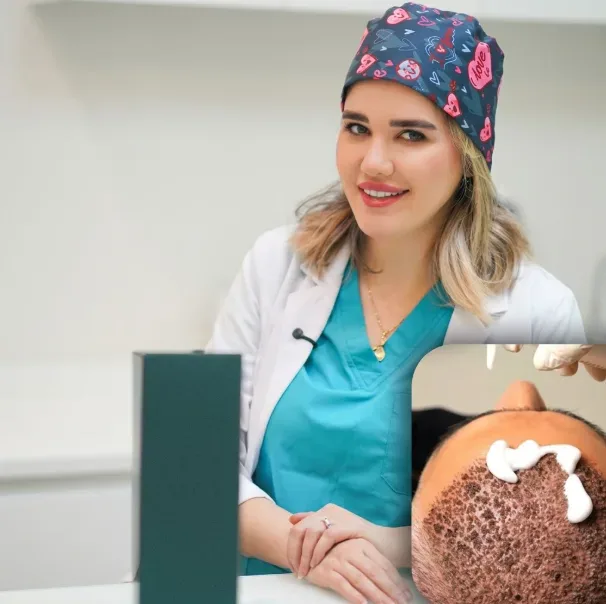
FUE Hair Transplant Recovery
Recovery varies from person to person. Temporary redness, swelling, sensitivity, and small scabs may appear around the treated areas during the early healing period.
Your aftercare instructions may include:
- Keeping the recipient area protected as advised
- Following washing instructions carefully
- Avoiding activities that may affect the treated area during the initial recovery period
- Taking prescribed medication when recommended
- Attending follow-up appointments
Transplanted hair does not grow immediately. Hair growth develops gradually, and the timeline can vary depending on the individual.
Not sure where to start?
Our specialists will assess your scalp biology, graft capacity, and aesthetic goals to create a hair restoration protocol designed entirely for you — from your first consultation onward.
Patient Results
Real before & after cases from Helia Clinic.
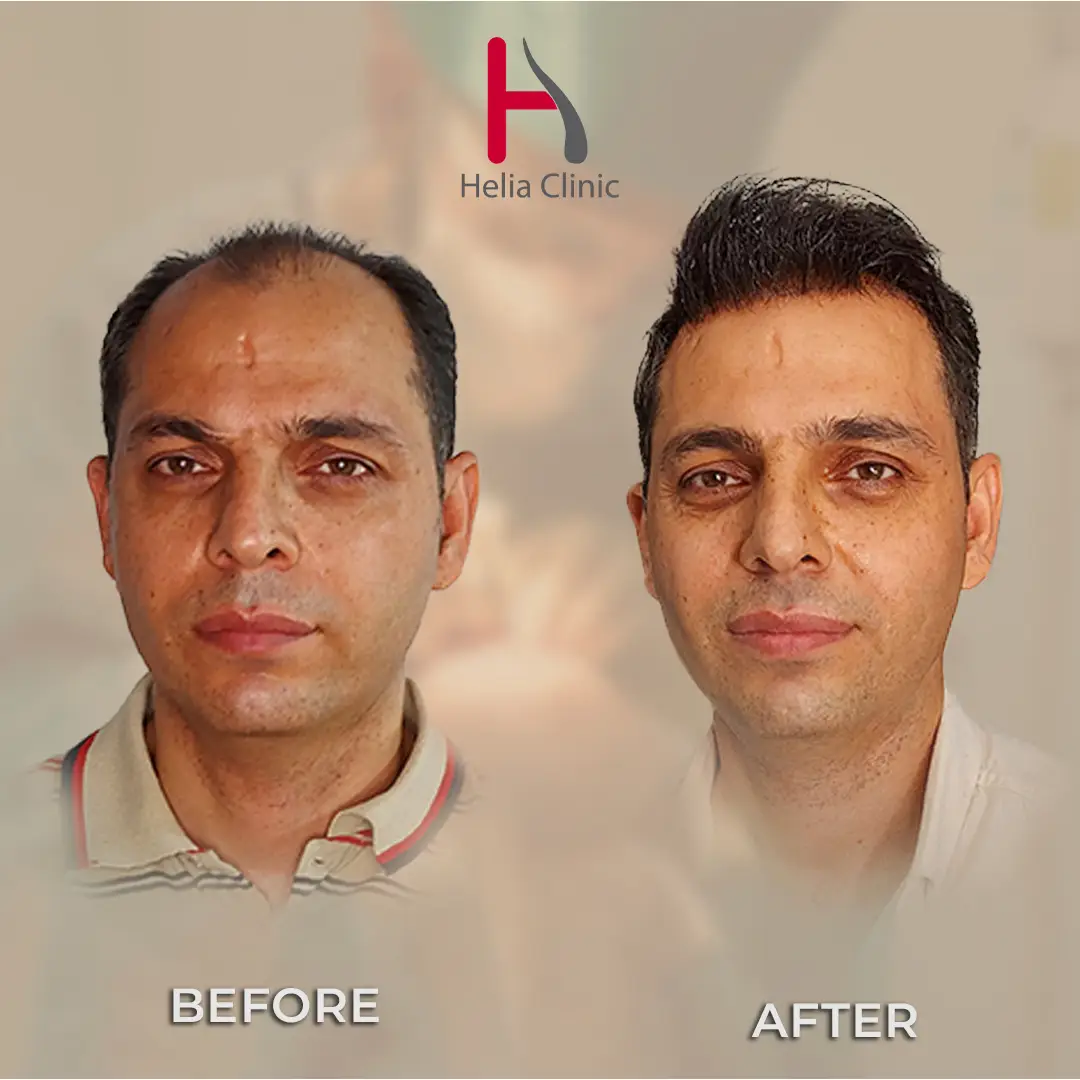

FUE Hair Transplant Before and After
Before and after results can vary significantly depending on the extent of hair loss, donor hair characteristics, number of grafts, and treatment area.
When reviewing hair transplant results, consider:
- The patient's starting level of hair loss
- Number of grafts used
- Treatment area
- Hairline design
- Time since the procedure
At Helia Clinic, treatment planning is based on your individual hair characteristics rather than using the same graft number or hairline design for every patient.
How Much Does FUE Hair Transplant Cost in Dubai?
The cost of an FUE hair transplant in Dubai depends on several factors, including:
- Number of grafts required
- Extent of hair loss
- Condition of the donor area
- Treatment technique
- Areas requiring restoration
- Individual treatment requirements
The final cost can be determined after assessing your hair loss and creating your treatment plan.
For current pricing and package options, see our Hair Transplant Cost & Packages page.
Why Choose Helia Clinic for FUE Hair Transplant?
Helia Clinic has more than 14 years of experience in hair restoration and provides individualized treatment planning for patients considering FUE.
Our approach focuses on:
- Detailed assessment of the donor and recipient areas
- Individual hairline planning
- Careful graft extraction and handling
- Natural-looking graft placement
- Sapphire FUE and Micro FUE options
- Personalized treatment planning
- Post-treatment guidance and follow-up