
Exosome Hair Therapy in Dubai
Exosome hair therapy in Dubai is an emerging approach being explored for its potential to support hair follicle activity and improve hair density, though clinical evidence remains limited.
At Helia, we consider your hair loss pattern, scalp condition, and goals to determine whether exosome-based treatment may be suitable for you.
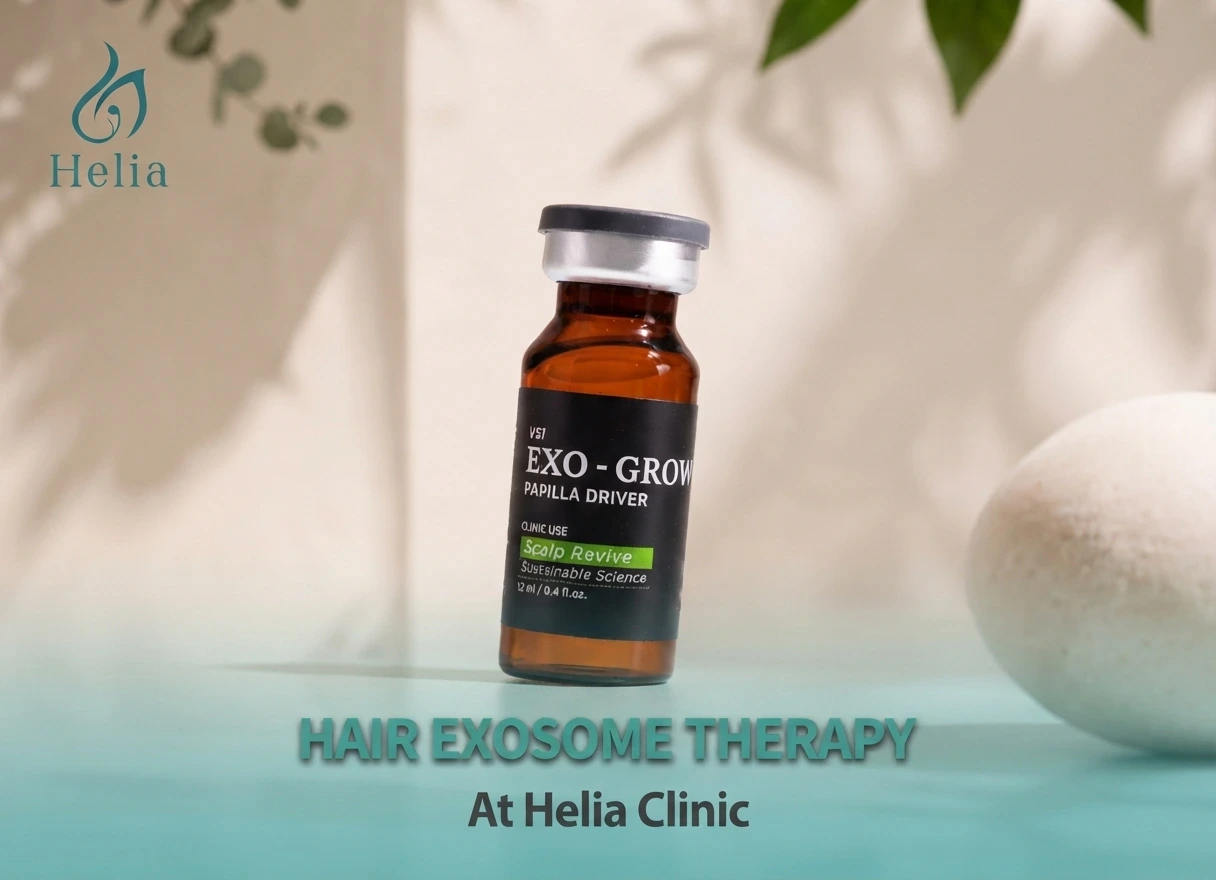
Understanding Exosome Therapy for Hair Loss
Exosomes are small extracellular vesicles that carry biological molecules involved in cellular communication. In hair restoration research, they are being investigated for their potential to influence processes associated with hair follicle function and growth.
Unlike PRP, exosome-based treatments do not necessarily use a patient's own blood. The source, preparation, formulation, and method of application can vary between products and treatment protocols.
How Does Exosome Therapy for Hair Loss Work?
Research suggests that exosomes may influence cellular signaling involved in hair follicle activity. However, the precise mechanisms and clinical benefits in humans are still being investigated.
People considering exosome therapy for hair loss in Dubai should understand that research findings do not establish a guaranteed outcome for every patient. The potential benefits depend on the specific product, treatment protocol, and individual condition.
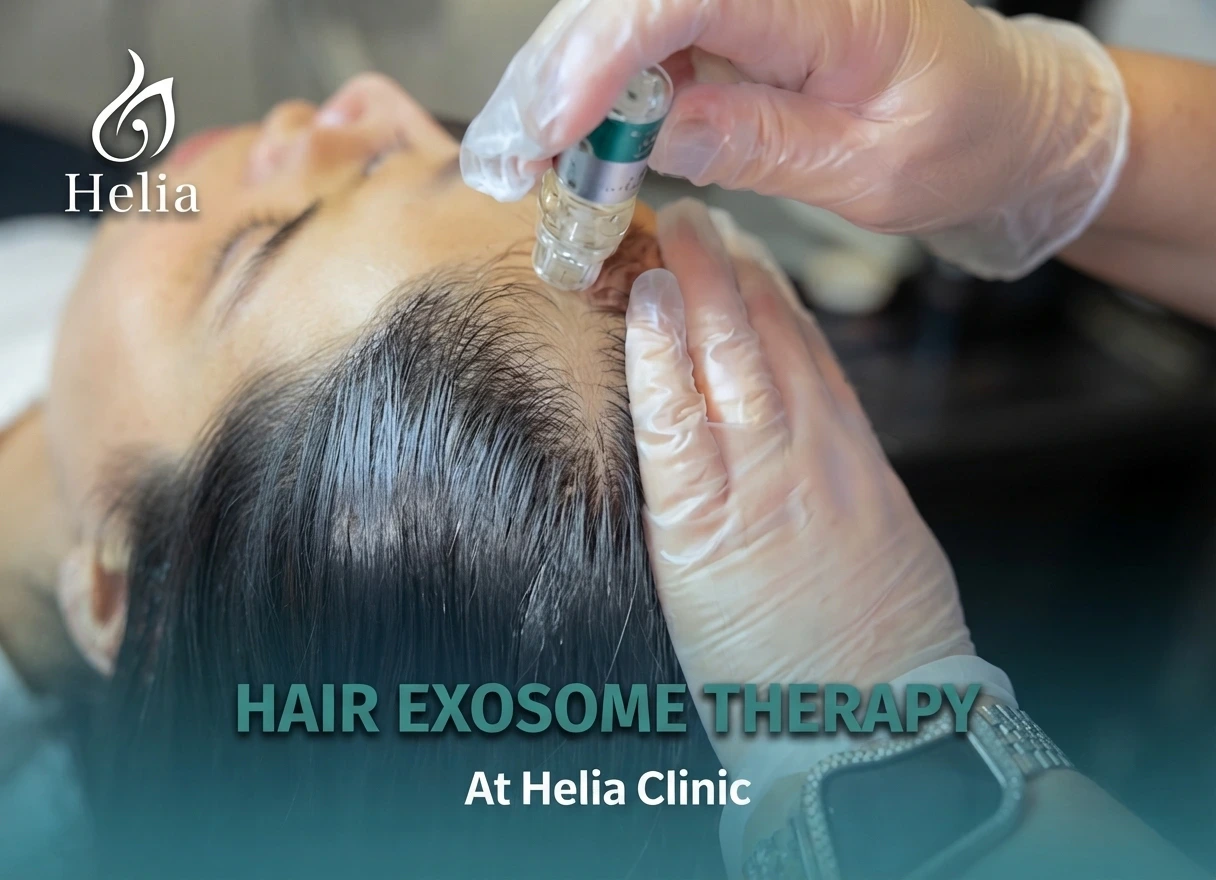
Who May Be a Candidate for Exosome Hair Treatment?
Exosome-based hair treatments may be considered by individuals experiencing hair thinning or certain forms of hair loss. Suitability depends on factors such as the cause of hair loss, scalp health, existing hair density, and medical history.
If you are considering exosomes hair treatment in Dubai, a professional assessment can help determine whether the treatment is appropriate for your hair loss pattern, scalp condition, and individual need.
Is Exosome Hair Therapy Safe?
The safety of exosome treatments depends on the source, manufacturing process, formulation, and delivery method. Research on exosome therapy for hair loss is still developing, and long-term safety and effectiveness have not been established.
Potential treatment-related reactions may include redness, irritation, swelling, or discomfort, depending on the method of application. Patients should discuss the product's source, safety information, potential risks, and regulatory status with their healthcare provider before treatment.
What Happens During Exosome Hair Treatment?
The steps involved in exosome hair treatment depend on the specific product and delivery method used. Your practitioner should explain the treatment protocol, including:
1. Consultation
Assessment of your hair loss pattern, scalp condition, and treatment goals.
2. Treatment planning
Discussion of the product, its source, and whether the approach is suitable for you.
3. Preparation
Following the required steps for the selected treatment protocol.
4. Application
Delivery of the product using the method recommended by the practitioner.
5. Aftercare
Personalized instructions regarding scalp care and follow-up.
The exact procedure, duration, and number of sessions depend on the treatment protocol offered.
Book an Exosome Hair Consultation
Discuss your hair loss pattern, scalp condition, and restoration goals with Helia specialists to explore whether exosome hair therapy may be appropriate for you.
What Results Can You Expect From Exosomes for Hair Growth?
People searching for exosomes for hair growth in Dubai may be interested in improving hair density, thickness, or the appearance of thinning areas.
Early clinical research has reported potential improvements in some hair-related outcomes, but studies have generally been limited by small sample sizes, differences in treatment protocols, and limited follow-up. More high-quality research is needed to establish consistent effectiveness.
Your practitioner can discuss the available evidence and help you understand what can realistically be expected from the proposed treatment.
How Many Exosome Hair Treatment Sessions Are Needed?
The recommended number of sessions depends on the specific product, delivery method, and treatment plan. There is currently no universally established treatment schedule for exosome therapy for hair loss.
During your consultation, your practitioner can explain the proposed protocol and any follow-up requirements.
What Should You Know Before Exosome Hair Treatment?
People researching hair exosomes in Dubai should ask about the product's source, manufacturing process, safety evidence, and intended method of application before proceeding with treatment.
It is also important to discuss your hair loss diagnosis and whether established treatment options may be more appropriate for your condition.
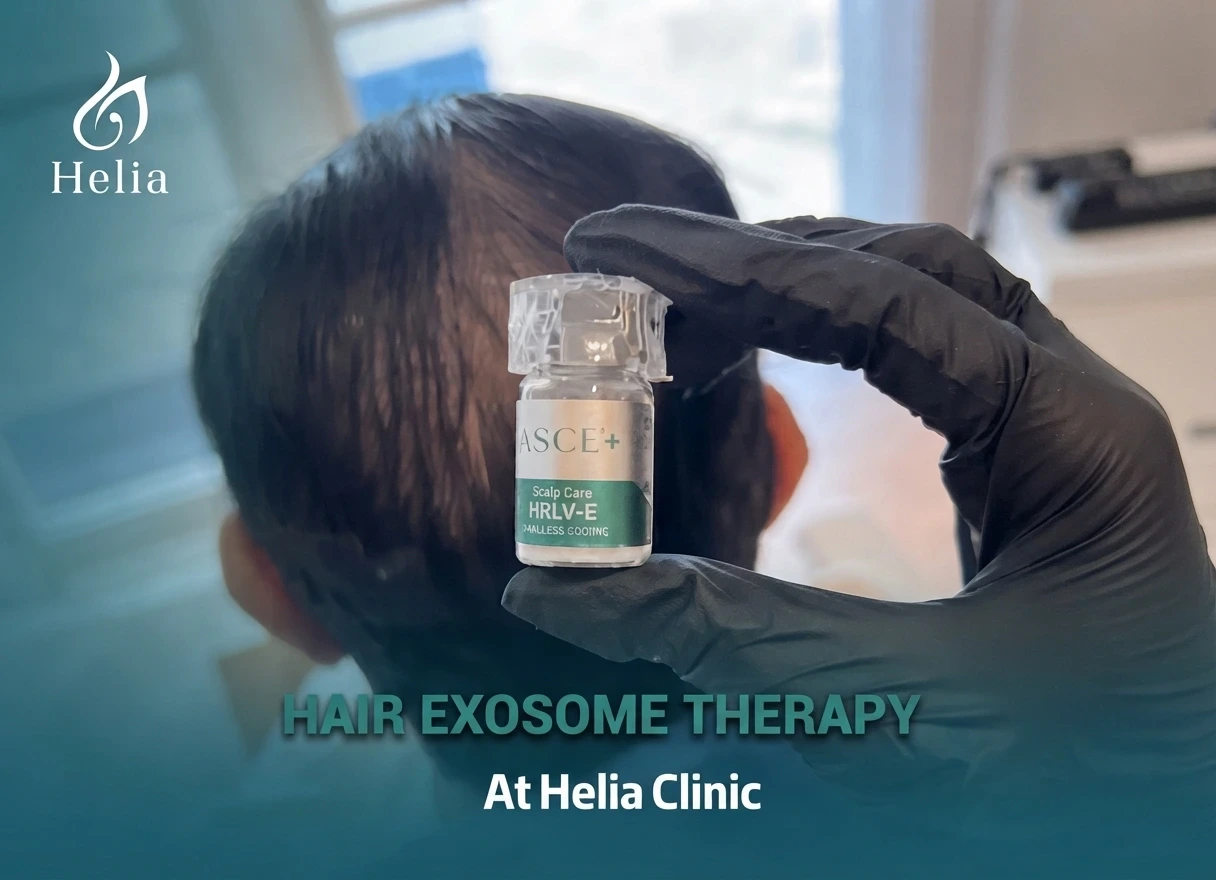
How to Prepare for Exosome Hair Treatment
Before undergoing exosome hair treatment, a professional consultation is an important first step. Your practitioner can assess your hair loss pattern, scalp condition, medical history, and individual treatment goals.
During the consultation, ask about the source and preparation of the exosome product, the proposed application method, potential risks, and available clinical evidence. Understanding these details can help you make an informed decision about whether the treatment is suitable for you.
Your practitioner will also explain any specific preparation instructions and aftercare recommendations based on the selected treatment protocol.
Why Consider Helia for Exosome Hair Treatment in Dubai?
At Helia, a personalized approach can help you explore hair restoration options based on your individual needs. An assessment of your hair loss pattern, scalp condition, and treatment goals can support an informed discussion about potential treatments.
Before proceeding with an exosome-based procedure, ask your practitioner to explain the specific product, its evidence, and its potential risks.
Book an Exosome Hair Consultation
Arrange a private consultation to discuss whether exosome hair therapy may suit your hair-loss pattern, scalp condition, and restoration goals.
Frequently Asked Questions
Book an Exosome Hair Consultation
Explore whether exosome hair therapy or another restoration approach may be suitable for your hair-loss condition.