Wart Removal in Dubai
Warts are common skin growths caused by certain types of the human papillomavirus (HPV). They can appear on different parts of the body, including the hands, feet, and face. Although usually harmless, warts may spread, become uncomfortable, or affect appearance.
Wart Removal in Dubai at Helia Clinic uses laser treatment to remove visible wart tissue. HPV and warts are not the same thing: HPV is the virus that causes warts, while a wart is a visible skin growth resulting from the infection. Laser treatment removes the growth but does not eliminate HPV from the body. In many cases, the immune system gradually controls the infection, and warts may resolve over time. However, this varies between individuals.
What Are Warts?
Warts are non-cancerous skin growths that develop when certain types of HPV infect the outer layer of the skin. They can vary in appearance depending on their type and location.
Common characteristics include:
- Small, raised, or flat growths.
- Rough or uneven surfaces.
- Flesh-coloured, pink, brown, or greyish appearance.
- Tiny dark spots within some warts.
- Single growths or clusters.
Warts can develop on different areas of the body and may spread to nearby skin through direct contact or scratching.
Types of Warts
Warts are classified according to their appearance and location. Identifying the type helps determine the appropriate treatment approach.
Common Warts
Common warts usually develop on the fingers, hands, and around the nails. They often have a rough, raised surface and may contain tiny dark spots.
Plantar Warts
Plantar warts appear on the soles of the feet, particularly on the heels and balls of the feet. Pressure from walking may push them inward and cause discomfort.
Flat Warts
Flat warts are smaller and smoother than common warts. They often appear in clusters on the face, hands, or legs and may be slightly darker than the surrounding skin.
Filiform Warts
Filiform warts are narrow, elongated growths that commonly appear around the mouth, nose, and eyelids. Their location requires careful assessment before treatment.
Periungual Warts
Periungual warts develop around or beneath the fingernails and toenails. They may affect nail growth and become uncomfortable if they spread around the nail bed.
What Causes Warts?
Warts develop when certain types of HPV enter the skin through small cuts or breaks. The virus causes skin cells to grow more rapidly, resulting in a visible growth.
Factors that may increase the risk of developing warts include:
- Direct skin contact: Touching an existing wart can spread the virus.
- Shared surfaces: Walking barefoot in communal showers or using shared personal items may increase exposure.
- Skin injuries: Cuts, scratches, and damaged skin can provide an entry point for HPV.
- Nail biting: Biting nails or picking the surrounding skin may increase the risk of warts around the fingers.
- Reduced immune function: The immune system plays an important role in controlling HPV infections.
Not everyone exposed to HPV develops visible warts. Individual immune responses influence whether an infection leads to skin growths.
How Is Wart Removal Performed with Laser?
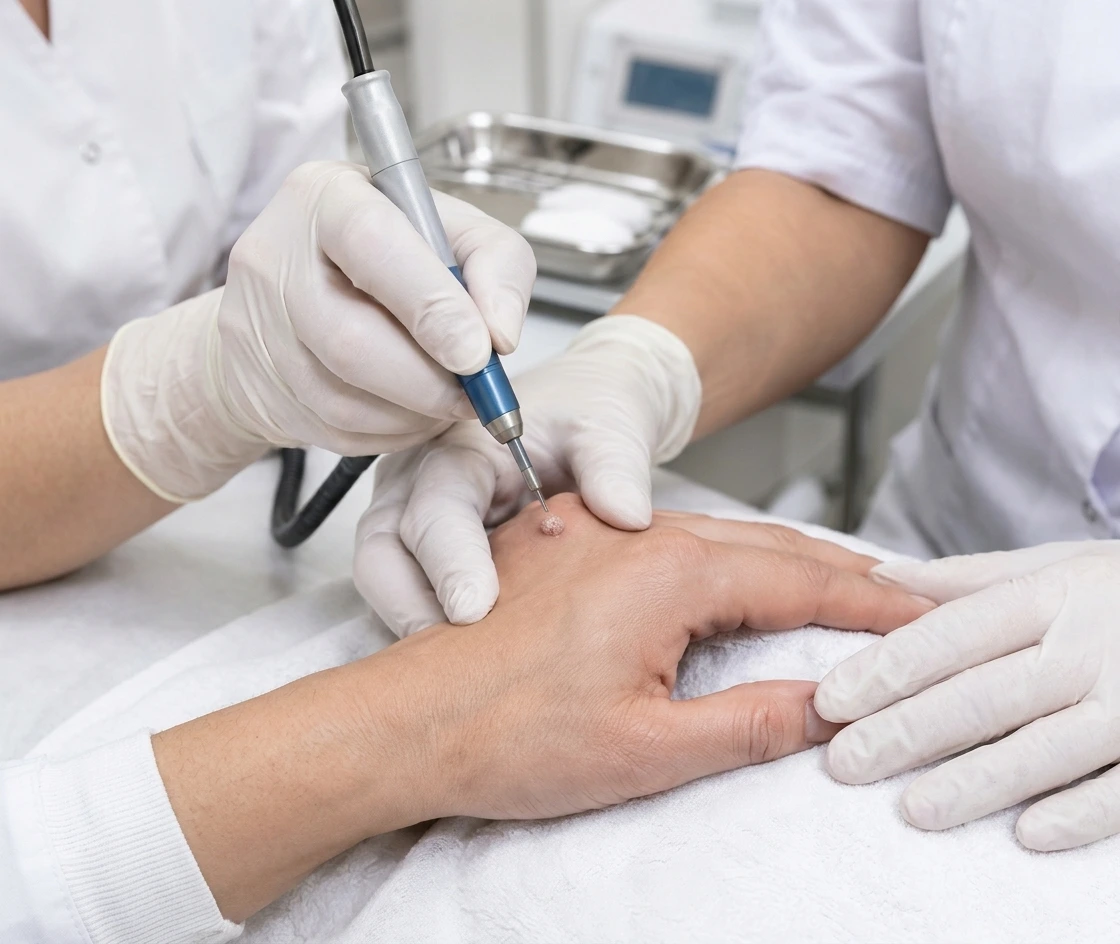
At Helia Clinic, laser treatment is used to target and remove visible wart tissue. The laser delivers controlled energy to the affected area, helping destroy the unwanted growth.
The procedure generally involves the following steps:
1. Skin Assessment
The practitioner examines the wart's size, appearance, location, and number of growths. Confirming the diagnosis is important because other skin conditions can resemble warts.
2. Preparation of the Treatment Area
The affected area is cleaned and prepared. Depending on the wart's size, location, and treatment requirements, local anaesthesia may be considered to improve comfort.
3. Laser Application
The laser is directed at the wart to target the affected tissue. The treatment approach depends on the growth's characteristics and the surrounding skin.
4. Post-Treatment Assessment
The treated area is checked, and aftercare instructions are provided. Temporary redness, tenderness, or scabbing may occur during healing.
How Is a Wart Removal Treatment Plan Developed?
A treatment plan is based on a confirmed diagnosis and an assessment of the wart's characteristics.
1. Diagnosis and Examination
The practitioner reviews the growth's appearance, location, duration, and previous treatment history. If the diagnosis is uncertain, further examination or a biopsy may be necessary before removal.
2. Individualised Treatment Planning
The laser treatment approach is selected according to the wart's size, thickness, location, and number of growths. Medical history and skin condition are also considered.
3. Follow-Up
Some warts require more than one session, depending on their size, depth, and response to treatment. Follow-up appointments help assess healing and determine whether further treatment is needed.
Who Is a Suitable Candidate for Wart Removal?
People with confirmed warts that cause discomfort, spread, or cosmetic concerns may consider laser removal.
Treatment may be considered for individuals who:
- Have warts on the hands, feet, face, or other areas.
- Experience discomfort from plantar warts while walking.
- Have multiple growths or warts that spread.
- Have not achieved the desired results with previous treatment.
An assessment is necessary to confirm that the skin growth is a wart and determine whether laser removal is appropriate.
What to Expect During a Wart Removal Appointment
An appointment generally begins with a review of medical history and an examination of the affected area. The practitioner explains the procedure and discusses any preparation required.
Appointments typically take 20 to 60 minutes, depending on the number, size, and location of the warts.
Some individuals may experience mild warmth, tingling, or discomfort during laser application. Local anaesthesia may be used when appropriate. After treatment, the area may feel sensitive for a short period.
Is Laser Wart Removal Safe?
Laser wart removal is generally well tolerated when performed following an appropriate assessment. However, possible side effects depend on the treatment area, wart characteristics, and individual skin response.
Temporary effects may include:
- Redness and swelling around the treated area.
- Mild tenderness or discomfort.
- Scabbing during the healing process.
- Temporary changes in skin colour.
- Scarring in some cases.
An active infection in the treatment area or a contraindication to laser treatment may make the procedure unsuitable. Warts that bleed, change rapidly, or have unusual characteristics should be assessed before removal.
Wart Removal Results and Recovery
Laser treatment targets visible wart tissue, and the treated area gradually heals as the skin recovers. Results depend on the wart's size, depth, location, and individual healing response.
A universal success percentage has not been established, as outcomes vary between individuals and treatment characteristics.
Recovery may range from 0 to 14 days, depending on the treatment area and extent of tissue removal. Smaller treated areas may require minimal downtime, while larger or deeper warts may take longer to heal.
Although laser treatment removes the visible growth, HPV may remain in the body. The immune system can control the infection over time, but this process varies. New warts may develop, and recurrence is possible.
Aftercare Following Laser Wart Removal
Following the recommended aftercare instructions helps protect the treated skin and support healing.
- Keep the treated area clean according to the provided instructions.
- Avoid picking at scabs or touching the healing area unnecessarily.
- Do not shave or exfoliate directly over the treated skin until it has healed.
- Avoid applying irritating skincare products to the treatment area.
- Protect exposed healing skin from direct sunlight.
- Avoid walking barefoot in communal areas, particularly if plantar warts were treated.
- Do not share towels, footwear, or personal grooming tools.
- Follow the recommended follow-up schedule.
If increasing pain, swelling, redness, or discharge develops, seek further assessment.
Wart Removal Cost in Dubai
The cost of Wart Removal in Dubai depends on several factors:
- Number of warts requiring treatment.
- Size, thickness, and location of the growths.
- Complexity of the laser procedure.
- Number of sessions required.
- Additional assessment or follow-up needs.
Treatment is individualised, and some individuals may require multiple visits. A consultation helps confirm the diagnosis, assess the affected areas, and provide a personalised cost estimate.
Frequently Asked Questions
Can warts return after laser removal?
Yes. Recurrence is possible because removing the visible growth does not necessarily eliminate HPV from the body. The likelihood varies depending on individual and wart-related factors.
How long does it take for the skin to heal after laser wart removal?
Recovery may take between 0 and 14 days, depending on the size, depth, and location of the treated wart.
How many laser sessions are needed to remove a wart?
Some warts may be treated in one session, while others require multiple visits. The number depends on the wart's characteristics and response to treatment.
Book Your Wart Removal in Dubai Consultation
Warts can spread to nearby areas, cause discomfort, or affect appearance depending on their location. A proper assessment helps confirm the diagnosis and determine whether laser removal is suitable.
At Helia Clinic, laser treatment is used to remove visible warts through an individualised approach based on the characteristics of each growth. Contact the clinic to learn more about Wart Removal in Dubai and arrange a consultation.