
Best Shampoo After Hair Transplant: Don’t Damage Your Grafts
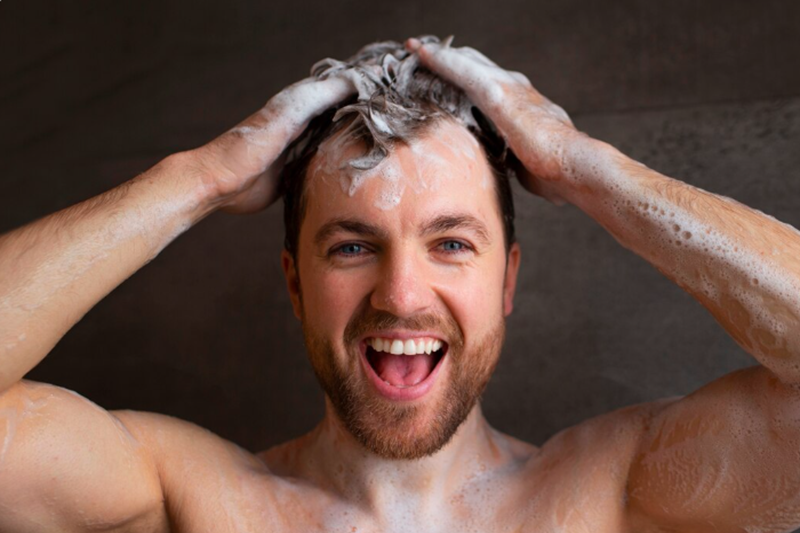
Choosing the best shampoo after hair transplant can help keep your scalp clean and comfortable while the grafts heal. During the early recovery period, harsh products and aggressive washing may irritate the scalp and disturb the healing area.
A gentle, sulfate-free formula is often a practical choice, but the right shampoo and washing schedule should always follow your surgeon’s instructions. This guide covers the ingredients to look for, what to avoid, and when you can return to your regular hair-care routine.
When Can You Wash Your Hair After a Hair Transplant?
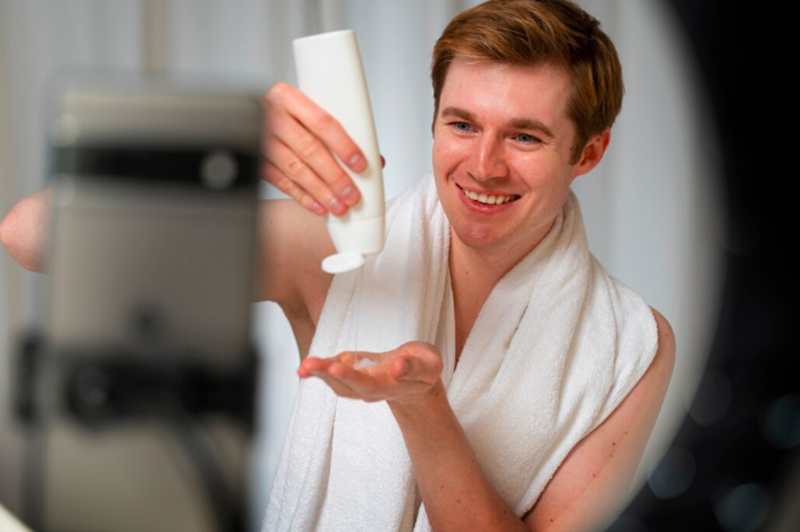
The timing of the first hair wash varies depending on the procedure and your surgeon’s aftercare protocol. Some patients may be allowed to wash their hair within the first few days, while others may need to wait longer.
Once washing is permitted, the transplanted area should be handled gently. Avoid scratching, rubbing, or directing strong water pressure directly onto the grafts.
If you are considering a hair transplant in Dubai, your medical team can provide personalized instructions for washing and scalp care after the procedure.
Not sure where to start?
Our specialists will assess your scalp biology, graft capacity, and aesthetic goals to create a hair restoration protocol designed entirely for you — from your first consultation onward.
What Should You Look for in a Shampoo After Hair Transplant?
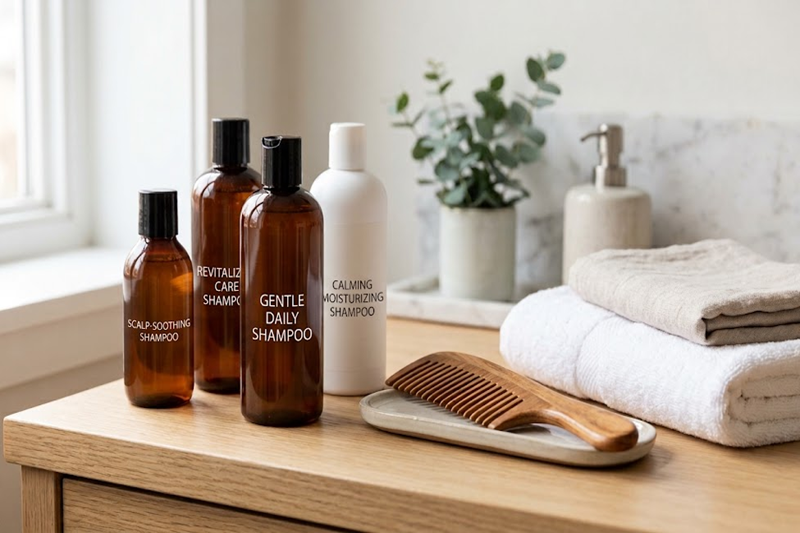
The best shampoo after hair transplant is not necessarily the most expensive or heavily marketed product. During the early healing period, the priority is a formula that cleans the scalp without unnecessary irritation.
Look for:
- A gentle cleansing formula
- A simple ingredient list
- Little or no added fragrance
- Ingredients suitable for sensitive skin
- No unnecessary exfoliating or strongly active ingredients
Is Sulfate-Free Shampoo Better After a Hair Transplant?
Sulfate-free shampoo can provide a gentler cleansing experience and may be more comfortable for a sensitive scalp. However, sulfate-free does not automatically mean that a shampoo is suitable immediately after surgery.
The entire formulation matters, as does the condition of your scalp. Your surgeon may recommend a specific product rather than asking you to choose a shampoo based on one ingredient alone.
Which Ingredients Should You Look for in a Post-Transplant Shampoo?
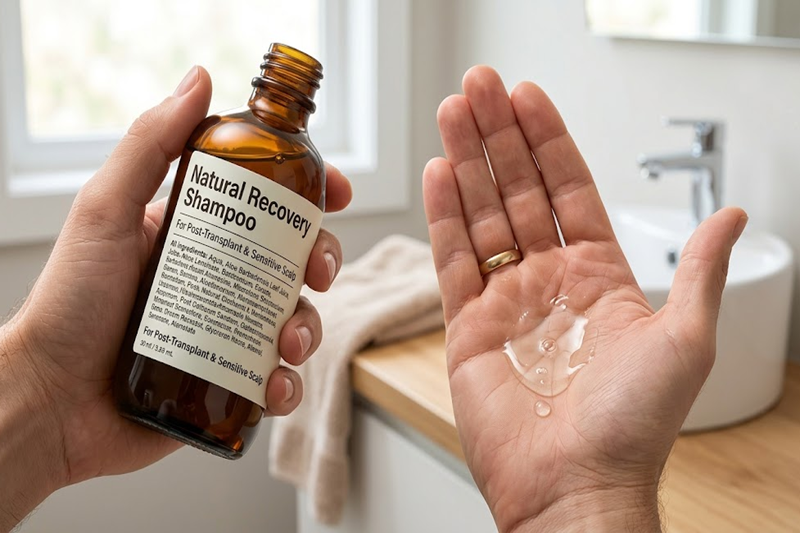
When selecting a shampoo after hair transplant, focus on the overall formulation rather than looking for one “miracle” ingredient.
Ingredients That May Be Suitable
Depending on your scalp and your surgeon’s recommendations, a gentle shampoo may contain:
- Glycerin for moisture support
- Panthenol for conditioning and scalp comfort
- Aloe vera in appropriately formulated products
- Mild cleansing agents instead of highly aggressive detergents
These ingredients do not guarantee that a product is appropriate for every patient. If you have sensitive skin or an existing scalp condition, ask your doctor before introducing a new shampoo.
Ingredients to Be Careful With
During early healing, it may be better to avoid products with potentially irritating or highly active ingredients unless your doctor recommends them.
These can include:
- Strong exfoliating acids
- High concentrations of alcohol
- Strong fragrances
- Intensive scalp treatments
- Strong anti-dandruff ingredients without medical guidance
The goal during early recovery is simple: clean the scalp gently without unnecessarily irritating or disturbing the healing area.
How to Wash Your Hair After a Hair Transplant
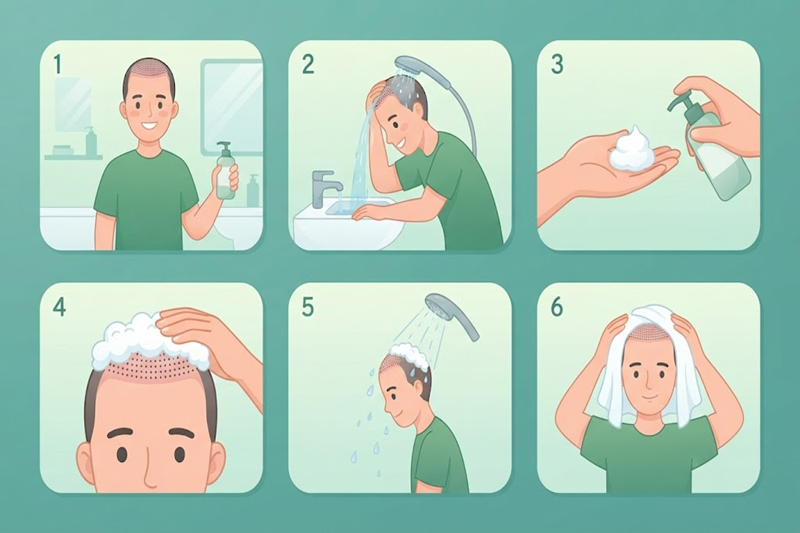
The way you wash your hair can be just as important as the shampoo you choose.
Once your surgeon has confirmed that washing is safe, follow the technique recommended by your clinic. In general, the transplanted area should be handled much more gently than your normal scalp.
A gentle washing routine may involve:
- Wet the scalp with lukewarm water.
- Apply a small amount of the recommended shampoo.
- Avoid scratching or vigorous rubbing over the recipient area.
- Allow the shampoo to cleanse the scalp without applying unnecessary pressure.
- Rinse gently without directing strong water pressure onto the grafts.
- Pat the area dry with a clean, soft towel or follow your doctor’s drying instructions.
Do not pick at scabs or scratch the scalp if itching develops. Persistent or severe symptoms should be discussed with your medical team.
Hair Transplant Shampoo and Medication Timeline
Shampoo is only one part of post-transplant care. Depending on your individual treatment plan, your doctor may prescribe medications or topical products during recovery.
There is no universal medication timeline after hair transplant, because prescriptions depend on your medical history, surgical technique, scalp condition, and surgeon’s protocol.
The First Few Days
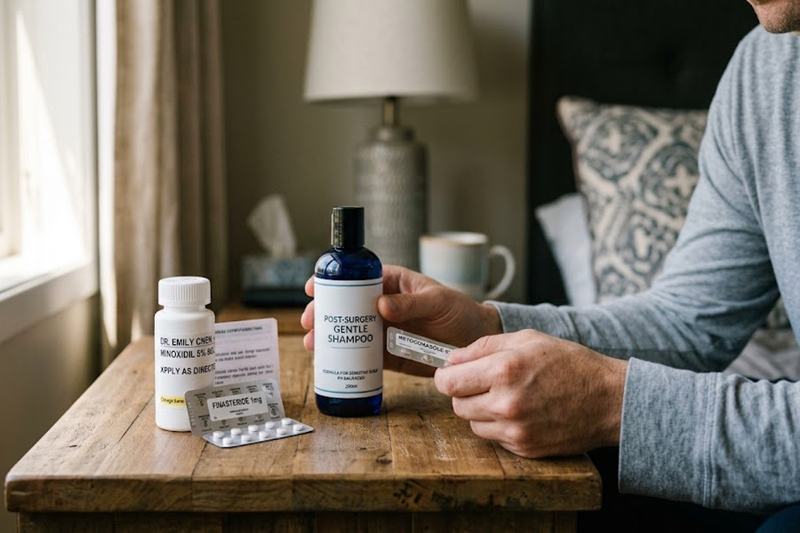
The transplanted area is still healing, so follow your clinic’s instructions carefully. Your surgeon may provide specific instructions about when to wash, what product to use, and whether any prescribed topical treatment should be applied.
Do not introduce additional shampoos, oils, serums, or scalp treatments without checking with your medical team.
After the First Week
As the scalp continues to heal, your doctor may allow more normal washing. At this stage, a gentle or sulfate-free shampoo may be suitable if it has been recommended for your recovery.
Continue using any prescribed medication exactly as directed.
After the First Month
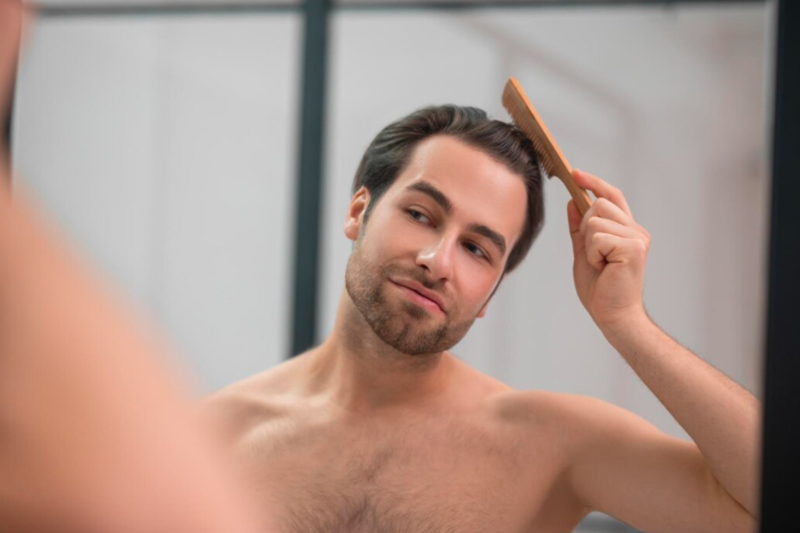
Once the scalp has healed sufficiently, many patients can gradually return to a more typical hair-care routine. Your surgeon can tell you when it is appropriate to resume stronger shampoos, styling products, anti-dandruff treatments, or other scalp products.
Your recovery should determine the timeline rather than a fixed number of days that applies to everyone.
Can Regular Shampoo Damage Hair Transplant Grafts?
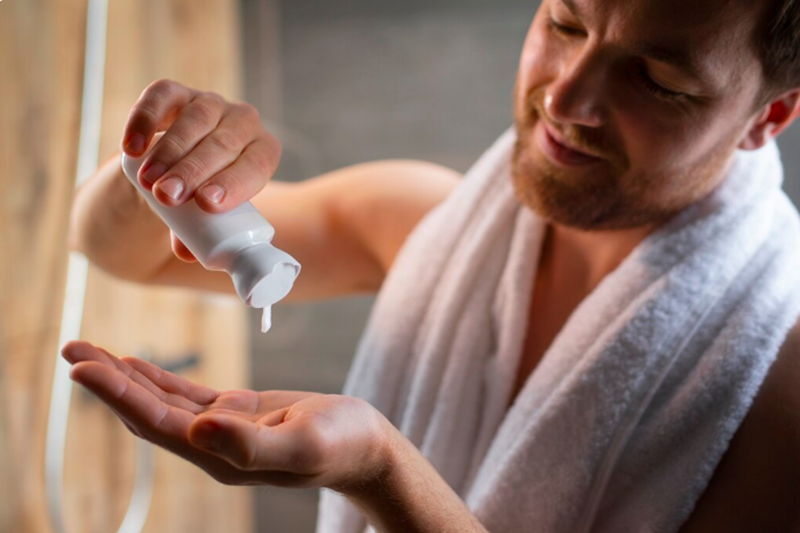
Regular shampoo does not automatically damage transplanted hair. However, using a product that irritates the scalp or washing too aggressively during early recovery may create unnecessary problems.
The concern is particularly relevant while the recipient area is still healing. Vigorous rubbing, scratching, picking at crusts, or applying unapproved products can interfere with proper post-operative care.
Once healing is complete, your surgeon may allow you to return to your usual shampoo if it suits your scalp and hair type.
What About Shampoo After an Eyebrow Transplant?
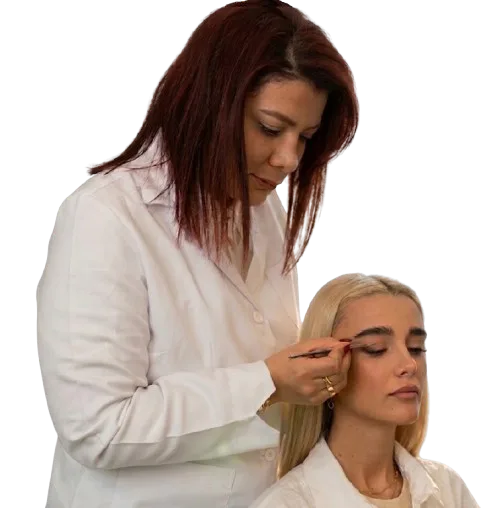
After an eyebrow transplant, the same principle of gentle care applies, but the transplanted area is smaller and more delicate.
Avoid rubbing, scratching, or applying regular facial cleansers and cosmetic products directly over the transplanted hairs until your surgeon says it is safe.
If you are considering an eyebrow transplant in Dubai, your surgeon can explain how to clean the eyebrow area and when you can return to your normal skincare and grooming routine.
When Should You Contact Your Hair Transplant Doctor?
Some degree of redness, sensitivity, swelling, or crusting can occur during normal recovery. However, symptoms that are severe, worsening, or unusual should be assessed by your medical team.
Contact your doctor if you experience:
- Increasing or severe pain
- Significant or worsening redness
- Persistent or excessive swelling
- Unusual discharge from the treated area
- Significant bleeding
- Fever or other signs of infection
- Severe irritation after using a hair-care product
You should also contact your surgeon if you are unsure whether a particular shampoo, medication, or topical product is appropriate for your stage of recovery.
Conclusion
Choosing the best shampoo after hair transplant is mainly about keeping the healing scalp clean without causing unnecessary irritation or friction. A gentle, sulfate-free formula can be a suitable option, but your surgeon’s instructions should always guide when and how you wash your hair.
Following the recommended washing technique, medication schedule, and post-transplant care can help protect the grafts while the scalp heals. If you are unsure about a shampoo or hair-care product, consult your hair transplant doctor before using it.
Not sure where to start?
Our specialists will assess your scalp biology, graft capacity, and aesthetic goals to create a hair restoration protocol designed entirely for you — from your first consultation onward.
Frequently Asked Questions
What is the best shampoo after hair transplant?
A gentle shampoo with a simple formulation is generally a suitable choice once your surgeon allows you to wash your hair. A sulfate-free formula may be preferred by some patients, particularly when the scalp is sensitive, but your doctor’s recommendation should come first.
Is sulfate-free shampoo better after a hair transplant?
Sulfate-free shampoo can provide a gentler cleansing experience for some people, but sulfate-free does not automatically mean better. The overall formulation, scalp sensitivity, and stage of healing should all be considered.
How soon can I use shampoo after a hair transplant?
The timing varies depending on the procedure and your surgeon’s aftercare protocol. Some patients may begin gentle washing within the first few days, while others may receive different instructions. Always follow the specific guidance provided by your transplant doctor.
Can I use anti-dandruff shampoo after a hair transplant?
Do not restart an anti-dandruff shampoo without checking with your doctor, particularly during early recovery. Some medicated shampoos contain active ingredients that may not be appropriate immediately after surgery.
Can shampoo make hair transplant grafts fall out?
Normal gentle shampooing, when permitted by your surgeon, should not be expected to make healthy transplanted grafts fall out. The greater concern during early recovery is aggressive rubbing, scratching, or otherwise disturbing the healing recipient area.
How long should I use a gentle shampoo after a hair transplant?
There is no single timeline for every patient. Your surgeon can advise when your scalp has healed enough for you to return to your regular shampoo and hair-care products.
Related Articles
Continue exploring clinical insights from the Helia Medical Journal.
 Blog
Blog
Body Hair Transplant (BHT): Can Beard Hair Grow on the Scalp?
Table of ContentsWhat Is a Body Hair Transplant?Can Beard Hair Grow on the Scalp?Scalp vs Beard vs Body Hair: Key DifferencesWhen Are Chest Hair Grafts Used?Who Is a…
 Blog
Blog
Hair Transplant in Dubai vs Turkey: Quality, Costs & Safety Compared
Choosing between a hair transplant in Dubai and Turkey depends on more than price. Turkey is known for its competitive costs and extensive hair restoration industry, while Dubai offers modern medical facilities, experienced specialists, and easier access to local follow-up care. This guide compares hair transplant costs, quality, safety, techniques, and aftercare in Dubai vs Turkey to help you make a more informed decision.
 Blog
Blog
High Density Hair Transplant: Techniques For Full Coverage & Cost
High density hair transplants are increasingly popular for achieving a fuller, natural-looking appearance. The average scalp holds 80–100 follicular units per square centimeter, which serves as a benchmark for planning. The article outlines precise hair density measurement methods, including manual counting and digital tools like trichoscopy. It also highlights key factors affecting achievable density, such as donor hair availability, scalp laxity, hair characteristics, and surgeon expertise.
Comments
Share your questions or clinical experience with our readers.