
How To Wash Hair After a Hair Transplant: 6 Expert Tips
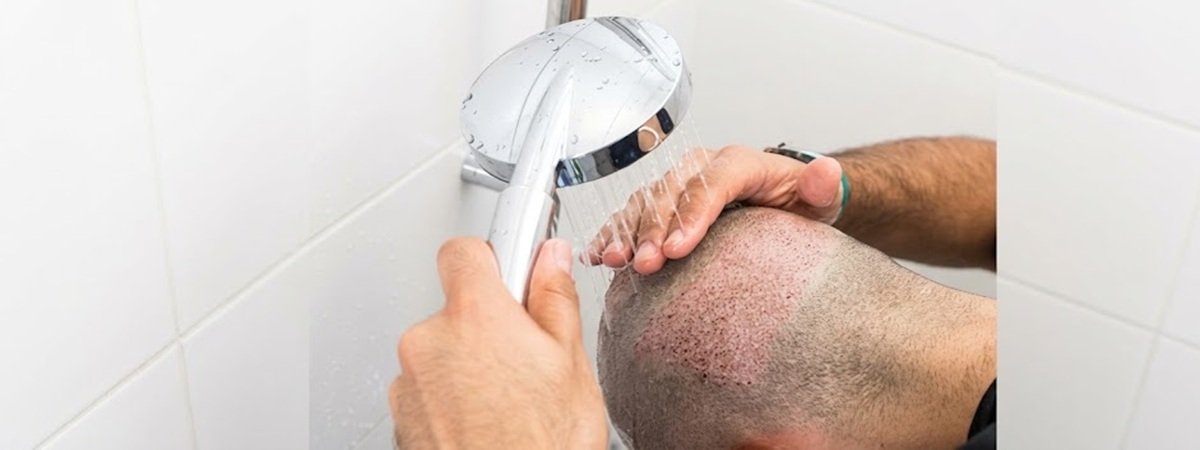
How to wash hair after a hair transplant safely is an important part of protecting the healing scalp. Using hot water, high pressure, or rough movements can irritate the treated area, so gentle washing is essential during recovery.
This guide covers the 6 essential steps for washing hair after a hair transplant, including the first wash after hair surgery, foam-and-rinse technique, water temperature and pressure, and how to gently remove scabs.
When Can You Wash Your Hair After a Hair Transplant?
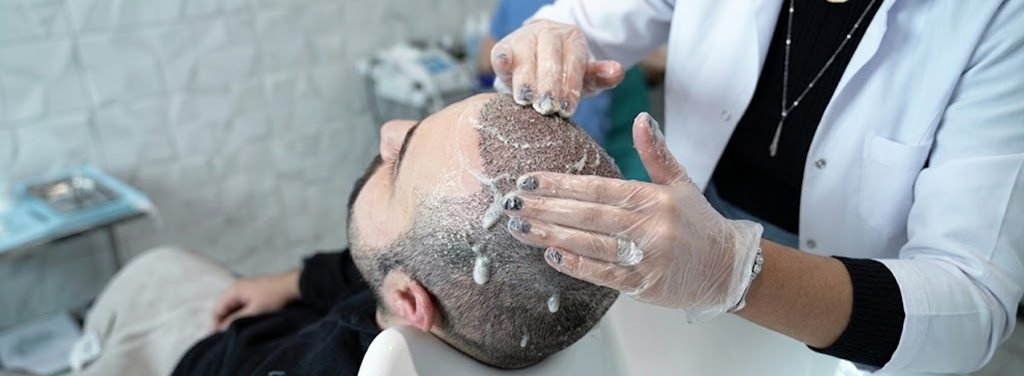
The timing of the first wash depends on your procedure and your surgeon’s post-operative instructions. There is no single schedule that applies to every patient. Wash hair after a hair transplant only when your surgeon or hair transplant provider has cleared you to do so.
Your provider may consider:
- The type of hair transplant procedure you had
- The condition of the recipient area
- How the scalp is healing
- Whether dressings are still being used
- Your individual aftercare plan
Once you have been cleared to wash your hair, the priority is to clean the scalp without rubbing, scratching, or putting unnecessary pressure on the grafts.
How to Wash Hair After a Hair Transplant
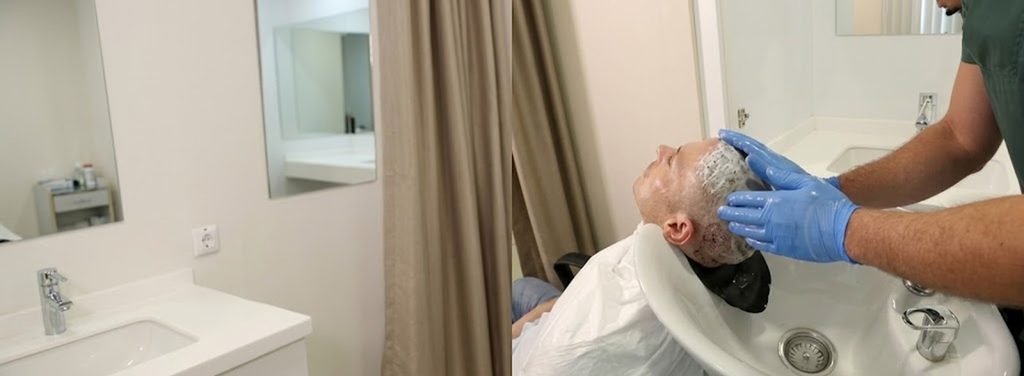
Your first wash after hair surgery should be much gentler than your normal hair-washing routine. The aim is to clean the scalp while minimizing friction and pressure around the transplanted grafts.
1. Wash Your Hands First
Wash your hands thoroughly before touching your scalp. This helps reduce the risk of transferring bacteria to the healing area.
2. Wet the Scalp With Lukewarm Water
Use lukewarm water rather than very hot or very cold water.
Do not place your head directly under a powerful shower stream. Instead, use a gentle flow or the method recommended by your clinic. Some hair transplant aftercare protocols recommend using a cup or jug to gently pour water over the transplanted area during the first few washes.
3. Apply the Recommended Shampoo
Use the shampoo recommended by your hair transplant provider.
If you have been instructed to use a gentle shampoo, you can create a light lather in your hands before applying it. Avoid putting concentrated shampoo directly onto sensitive areas unless your provider specifically instructs you to do so.
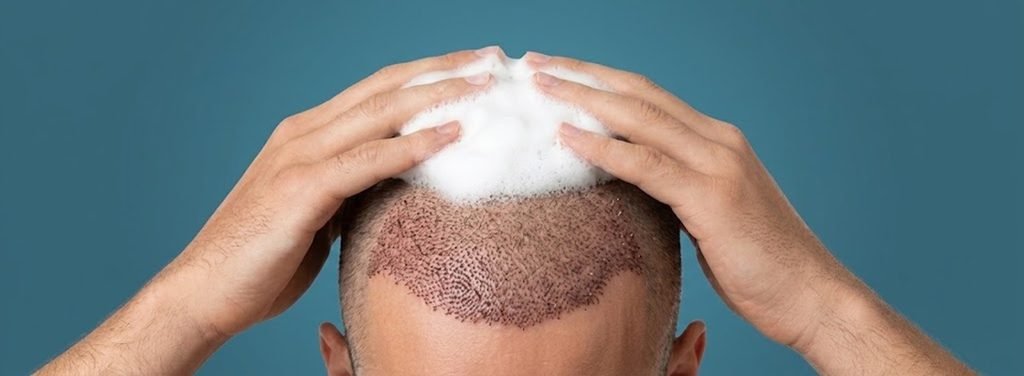
4. Apply the Foam Gently
Rather than vigorously massaging the scalp, gently apply the shampoo foam over the treated area.
Do not:
- Scratch with your fingernails
- Rub the grafts aggressively
- Scrub with a towel or sponge
- Pull at scabs
- Massage the recipient area unless your surgeon has told you that it is safe
The transplanted area should be handled gently while it heals.
5. Rinse With Low Pressure
Rinse away the shampoo using lukewarm water and low pressure.
If your clinic has recommended the cup method, gently pour water over the scalp rather than directing a strong shower stream at the grafts.
6. Dry the Scalp Carefully
Do not rub the scalp dry.
Instead, gently pat the surrounding area with a clean, soft towel, or allow the transplanted area to air-dry if this is what your clinic recommends. ISHRS postoperative guidance specifically advises gentle patting or air drying rather than rubbing the transplanted area.
Foam and Rinse Protocol After a Hair Transplant
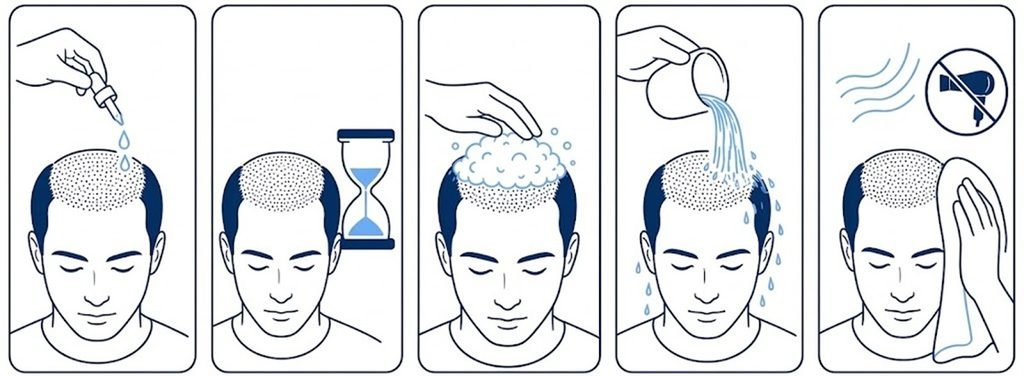
A gentle foam and rinse protocol can make washing easier during the early recovery period.
First, wet the scalp with lukewarm water. Create a light lather with the recommended shampoo and gently apply the foam to the scalp without scrubbing.
Allow the foam to sit only for the amount of time recommended by your provider. Then rinse using low water pressure or the cup-and-pour method recommended by your clinic.
The goal is to remove shampoo and keep the scalp clean without creating unnecessary friction or pressure around the grafts.
Water Temperature and Pressure Rules
Water temperature and pressure are two of the easiest things to control when washing hair after hair transplant.
Use Lukewarm Water
Choose water that feels comfortably warm rather than hot.
Very hot water can increase discomfort and irritate a sensitive scalp. Extremely cold water may also be uncomfortable during the early healing period.
Lukewarm water provides a gentle option for cleansing without exposing the healing area to temperature extremes.
Keep Water Pressure Low
Avoid directing a strong shower jet directly at the transplanted grafts.
During the earliest stage of recovery, a cup, jug, or similarly controlled flow may be preferable if recommended by your provider. An ISHRS postoperative protocol specifically advises avoiding direct shower spray during the first few days and using gently poured water instead.
As healing progresses, your provider can tell you when it is appropriate to return to your normal shower pressure.
How To Gently Remove Scabs After a Hair Transplant

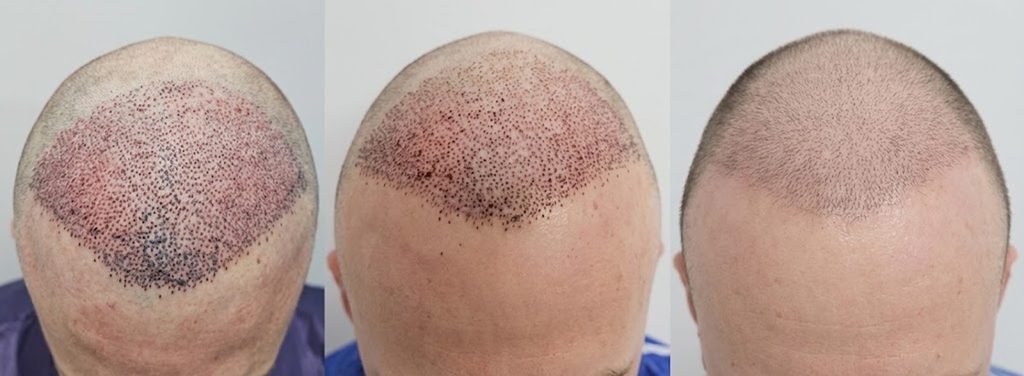
Small scabs or crusts around transplanted grafts are a normal part of the healing process. ISHRS patient information notes that small crusts can form around grafts and generally flake off during the first days to couple of weeks after surgery.
So, how to gently remove scabs?
The key is not to force them off.
Once your surgeon has cleared you to wash the scalp:
- Wet the area gently with lukewarm water.
- Apply the recommended shampoo or foam.
- Allow washing to soften the crusts naturally.
- Cleanse without scratching or aggressively rubbing.
- Rinse gently using low pressure.
- Let loose scabs come away naturally.
Never pick at a scab that is still firmly attached. Scratching or pulling at healing areas can cause irritation or bleeding and may interfere with normal wound healing. General surgical wound-care guidance also recommends avoiding scratching and rubbing healing wounds.
Common Mistakes When Washing Hair After a Hair Transplant
Even a simple shower can become too aggressive if you return to your normal routine too quickly.
Using High Water Pressure
A strong shower stream can put unnecessary force on a healing scalp. Keep the pressure low and follow your provider’s instructions.
Scrubbing the Recipient Area
Normal shampooing often involves vigorous massage, but the transplanted area needs gentler handling during early recovery.
Picking or Scratching Scabs
Do not pull off scabs that are still attached. Allow them to loosen naturally through the recommended washing process.
Using Very Hot Water
Choose lukewarm water instead of very hot water while the scalp is sensitive.
Rubbing the Scalp With a Towel
Avoid vigorous towel drying. Pat gently or allow the area to air-dry if your clinic recommends it.
Using Hair Products Too Early
Avoid introducing styling products, dyes, sprays, oils, or other products to the healing area until your transplant provider says they are appropriate.
When Can You Return to Normal Hair Washing?
Your return to a normal hair-washing routine depends on how your scalp is healing and the instructions provided by your surgeon.
As the recipient area heals, your provider may allow you to gradually:
- Increase water pressure
- Massage the scalp more normally
- Return to your usual shampooing technique
- Resume your regular hair-care products
There is no need to rush this transition. Following your clinic’s instructions is more important than following a fixed timeline.
When Should You Contact Your Hair Transplant Clinic?
Some redness, tightness, swelling, itching, and small crusts can occur during normal recovery.
However, contact your hair transplant provider if you develop symptoms that are worsening or appear unusual, such as:
- Increasing or severe pain
- Significant or worsening swelling
- Persistent bleeding
- Increasing redness
- Pus or unusual drainage
- Signs of infection
- Any sudden change that concerns you
If you are unsure whether a particular change is part of normal healing, contact your transplant provider for individual advice.
FAQ
Can I wash my hair immediately after a hair transplant?
Not always. The timing of your first wash depends on your procedure and your surgeon’s instructions. Some protocols allow gentle washing relatively soon after surgery, while others may use a different schedule.
What shampoo should I use after a hair transplant?
Use the shampoo recommended by your hair transplant provider. During the early recovery period, avoid introducing new or potentially irritating hair products without professional guidance.
Can I shower normally after a hair transplant?
You may be able to shower once your provider allows it, but normal showering does not necessarily mean normal water pressure. During early recovery, keep the water flow gentle and avoid directing a strong stream at the transplanted area.
Should I remove scabs after a hair transplant?
Do not pick or forcibly remove firmly attached scabs. Gentle washing can help soften crusts so that they gradually loosen and fall away naturally.
Can I rub my scalp when washing after a hair transplant?
Avoid rubbing or scratching the transplanted area during early healing. Your surgeon can tell you when normal scalp massage is appropriate again.
What if I accidentally touch a graft while washing?
An accidental light touch does not necessarily mean that a graft has been damaged. Avoid further rubbing and continue with gentle aftercare. If there is bleeding, significant pain, or another concerning change, contact your transplant provider.
Final Thoughts
Learning how to wash hair after a hair transplant can help you maintain scalp hygiene while protecting the healing area. Use lukewarm water, keep water pressure low, apply shampoo gently, and avoid scratching or forcibly removing scabs.
The most important rule is to follow your hair transplant provider’s specific aftercare instructions. Your surgeon can determine when you should begin washing, how much pressure is appropriate, and when you can safely return to your normal hair-care routine.
If you are considering a hair transplant, learn more about hair transplant procedures and speak with a qualified specialist about the procedure, recovery process, and aftercare recommendations.
Interested in this procedure? Book a free evaluation with our specialists.