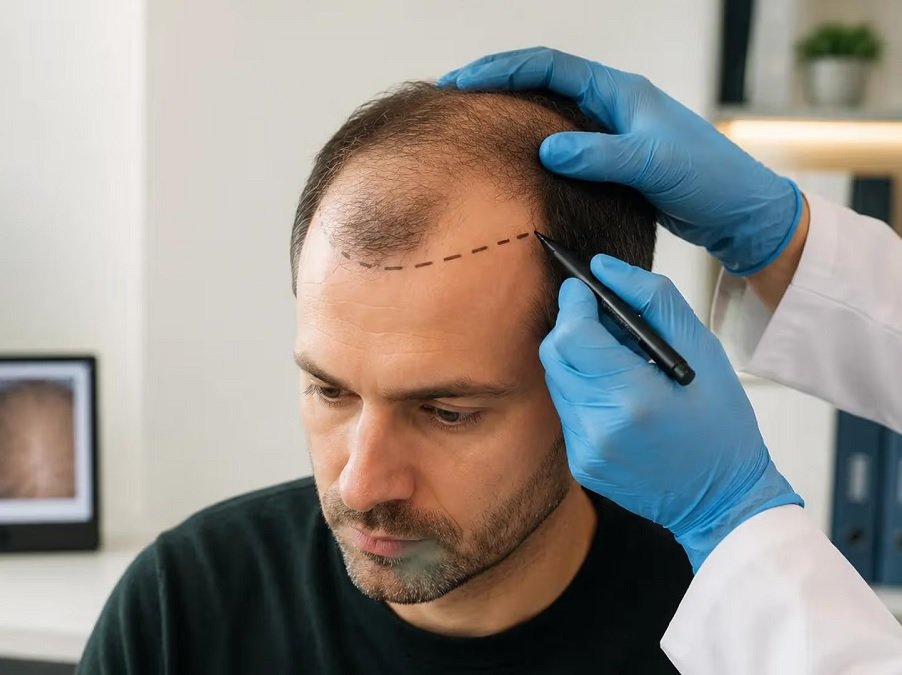
Many people lack confidence because of scars, stitches, or burns, and they try to hide them. Hair transplantation can be a great solution for those dealing with such problems. When it comes to performing hair transplant on scalp scar, there are specific factors to consider. Given the sensitivity of transplanting hair onto burn sites, it’s crucial to have an experienced and skilled doctor assess your suitability for the procedure. Helia Beauty Skin and Hair Clinic, known for its top specialist doctor, is a good option in this regard.
Can you do a hair transplant over a scar? And who is a good candidate?
Hair transplant into scar tissue is indeed possible, but certain prerequisites must be met. Ideally, the individual should schedule a Hair Transplant Consultation with a dermatologist for a thorough clinical evaluation. After this assessment, the dermatologist will determine if the person is a suitable candidate for the procedure. Several factors should be taken into consideration, which include:
- The doctor needs to check the wound to diagnose whether the patient is a good candidate for transplant or not.
- The wound should have healed for at least six months.
- The skin around the wound shouldn’t be red or pink, but white.
- The injured area should have enough blood supply.

Which method is better for hair transplant on scar tissue?
There are various techniques for hair transplant on scars and stitches, and determining the most suitable method depends on individual circumstances. Typically, two main approaches are utilized: FUT and FUE. With the FUE technique, follicles are harvested individually. The choice of transplant method is based on factors such as the depth of the scar, the targeted area, and the blood supply. Following a thorough physical examination, the doctor can recommend the most appropriate transplant method for each patient.
Hair transplant on Head Fracture Scar
To figure out if hair can be transplanted into a scar from a head fracture, a doctor needs to do a clinical examination. The doctor can assess the quality of blood flow in the area. If blood flow is okay and the scar has healed well, then a hair transplant is possible. It should be noted that the scalp must be completely restored. Meeting both of these criteria allows for the possibility of transplantation; otherwise, scar tissue hair restoration cannot be achieved.
Hair Transplant For Burn Victims
Individuals who lose some of their hair due to burns often choose hair transplantation to regain it. It’s possible to restore hair in burned areas of the scalp, but certain conditions must be taken into consideration. For example, the skin must have partially healed after the burn, and there must be sufficient blood supply in the burned area. However, because burns cause significant skin damage, it’s not realistic to expect high hair density after transplantation. Generally, the density of transplanted hair depends on the severity of the burn.
Hair Transplant for Covering Surgical Scar Repair
Many individuals seek ways to conceal surgical scars, driven by a desire for aesthetic improvement. One of the methods considered is hair transplantation. However, due to the limited hair density, complete concealment of the scar site may not be achievable. To accurately assess the situation, it is advisable for a doctor to examine the patient. A definitive diagnosis cannot be guaranteed without a thorough evaluation.
What are the most serious complications of hair transplant on scars?
While hair transplant on scars and sutures generally carry a low risk, it’s important to be aware that all medical procedures entail some level of risk. Therefore, it’s strongly recommended to be aware of potential hazards. One concern is that the area where transplantation is planned may have a lower hair density than desired. This is particularly due to the presence of wounds and stitches, which may affect the preparation of the planting area. Furthermore, the risk of infection after hair transplant increases if proper aftercare and hygienic practices are not followed. This entails keeping the area clean and diligently following post-operative instructions. It’s important to highlight that candidates must adhere to the recommended schedule for all prescribed antibiotics and medications to ensure a higher quality recovery period.
The Average Cost for a Hair Transplant on Scar and Stitches
Determining the exact cost of scars hair transplant and stitches is generally difficult. Initially, individuals must visit a clinic for the doctor to assess their situation and provide a cost estimate based on various factors. Variables like the depth and size of the scar can influence the final expenses, leading to potential fluctuations in hair transplant prices.
Eyebrow Scar Hair Transplant and Using Facial Hair Transplants to Cover Scarring
Hair transplants can also be performed on scars and stitches in the eyebrows and beard. However, certain conditions must be met for this to be viable. The patient should visit the clinic so that the doctor can assess the situation. In case of benefiting from the conditions, beard and Eyebrow Transplantation is unimpeded. Generally, the conditions required for transplantation are as follows:
- The patient should wait at least six months after receiving stitches in their eyebrows and beard.
- The skin should have a reddish or pinkish color, indicating good blood circulation.
- There must be enough blood flowing to the area in question.
Hair transplant on scars or micro pigmentation?
micropigmentation, a cosmetic technique involving the injection of organic or plant pigments into the skin’s epidermis layer, provides a non-invasive solution for concealing scars, sutures, and other imperfections. This choice often leaves individuals torn between opting for micropigmentation or traditional hair transplant procedures. Ultimately, selecting each technique depends on the applicant’s preferences.
In contrast to micropigmentation treatment, hair transplantation offers a more natural solution and is often favored for its aesthetic advantages, despite limitations in certain areas. However, when transplantation isn’t feasible, micropigmentation becomes a viable alternative.
When comparing micro pigmentation to hair transplantation, the latter often presents a more natural appearance and is favored for its aesthetic appeal. However, in cases where traditional transplantation is not feasible, such as in certain regions, micro pigmentation can serve as a viable alternative. As mentioned earlier, a successful hair transplant for scar repair requires specific conditions to be met, including a minimum of six months passing since the injury, adequate blood supply, and some healing of the damaged skin. micropigmentation can also be beneficial for:
- Individuals who are not suitable candidates for hair transplant.
- Those seeking to restore scars.
- People undergoing chemotherapy treatment.
- Individuals with significant hair damage.
- Those experiencing reduced blood supply to areas of their scalp due to factors such as fractures.
Scar restoration by scalp micropigmentation (SMP)
Fractures, stitches, or any sort of injury can cause a whole bunch of issues for someone. These could range from looking less than stellar to having trouble with blood flow.
- It is cheaper than hair transplants.
- It requires a shorter recovery period, allowing individuals to return to their normal activities sooner.
- It carries a minimal risk of severe or adverse side effects.
- It has the potential to boost self-confidence in individuals.
Conclusion
Hair transplant on scars is often seen as an effective method to conceal them. However, due to potential limitations in achieving full density, complete coverage may not always be possible. In cases where there is sufficient blood supply in the scarred or damaged skin area, a hair transplant for scars can produce positive outcomes. Alternatively, scalp micro might be considered if blood circulation is inadequate. It’s crucial to choose reputable and experienced clinics to ensure the best results of hair transplant. Helia Beauty Skin and Hair Clinic stands as a promising option. To book a consultation appointment, keep in touch with our experts through communication channels.