
Haircuts After Hair Transplant: When Can You Cut or Shave?
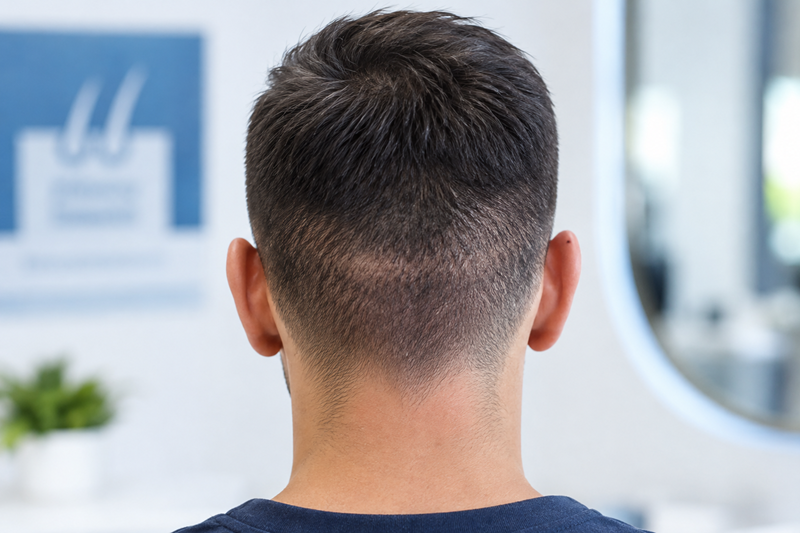
Knowing when to get a haircut after a hair transplant is an important part of post-operative care. Cutting your hair too soon, particularly with clippers or a razor, may irritate the scalp or interfere with healing. The safest timing depends on whether you want to trim the donor area or the transplanted area, the technique used during surgery, and your recovery progress.
An international expert consensus statement recommends waiting approximately one month before cutting or dyeing hair after a hair transplant. However, this is a general recommendation, not a guarantee that every type of haircut is safe at that point. International Expert Consensus Statement on Pre- and Post-Hair Transplantation Care
When Can You Get Your First Haircut After a Hair Transplant?
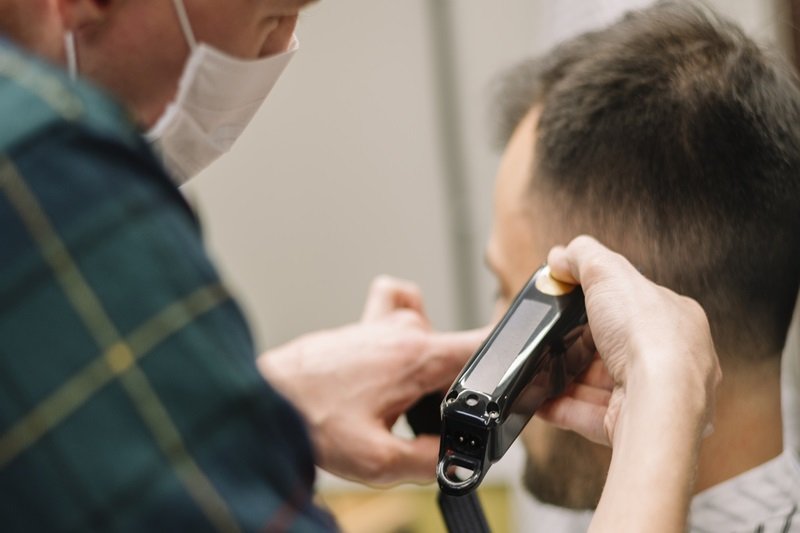
Many patients can consider their first haircut around four weeks after surgery, provided the scalp has healed properly and their surgeon approves. During the early recovery period, the recipient area is particularly vulnerable to pressure and friction, while the donor area also needs time to recover.
The appropriate timing depends on several factors:
- Healing progress: Persistent redness, tenderness, open wounds, or scabbing may mean you need more time before cutting your hair.
- Surgical technique: Follicular Unit Extraction (FUE) involves individual extraction sites, whereas Follicular Unit Transplantation (FUT) involves removing a strip of scalp.
- Haircut method: Scissors, clippers, and razors differ in how closely they approach the skin.
- Medical advice: Your surgeon can assess both areas and recommend when each can be trimmed safely.
The following table provides a general guide rather than a personalized medical schedule.
| Haircut method | General consideration |
|---|---|
| Scissor trim | May be suitable after the initial healing period, with your surgeon’s approval |
| Electric clippers | Wait until the treated area has healed sufficiently and your surgeon approves |
| Short buzz cut | Consider the condition of the donor skin and the length of the clipper guard |
| Razor shave | Requires particular caution because the blade directly contacts the skin |
If your scalp is still irritated or healing more slowly than expected, postpone your haircut and contact your surgical team.
Not sure where to start?
Our specialists will assess your scalp biology, graft capacity, and aesthetic goals to create a hair restoration protocol designed entirely for you — from your first consultation onward.
Scissors vs. Clippers After Hair Transplant
The tool used for your first haircut matters because different methods expose the scalp to different levels of contact.
Cutting Hair With Scissors
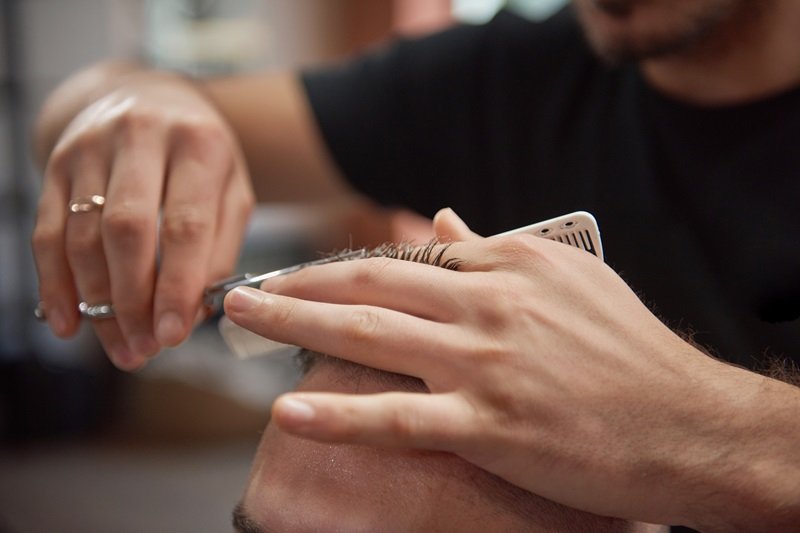
Scissors can be a practical option for an initial trim because the hair can be shortened without placing blades directly against the scalp. Once your surgeon confirms that healing is progressing normally, a careful scissor cut may help tidy your hairstyle while leaving some length.
The hairdresser should avoid pulling the hair, scraping the scalp, or pressing the scissors against sensitive areas. Even a scissor cut should be postponed if the skin has not healed sufficiently.
Using Electric Clippers
Electric clippers cut hair closer to the scalp and may cause friction when used directly over recently treated skin. Their suitability depends on the clipper guard, the area being trimmed, and the condition of the scalp.
Ask your surgeon when you can use clippers on the donor and recipient areas separately. Permission to trim the donor area does not automatically mean that the transplanted area is ready for the same treatment.
Shaving With a Razor
A razor produces a very close shave and directly contacts the skin. Avoid using it over healing transplant sites. Wait until the skin has recovered and your surgeon confirms that close shaving is appropriate.
When Can You Cut the Donor Area?
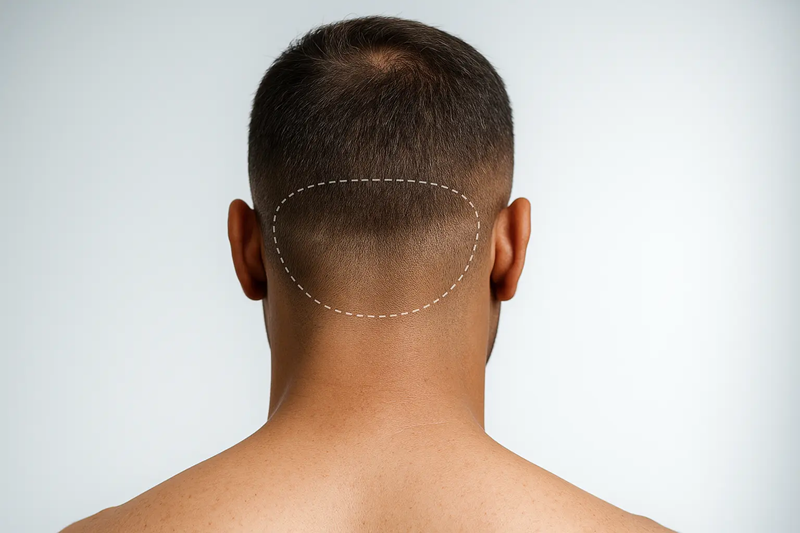
The donor area is usually located at the back and sides of the scalp, where follicles are harvested for transplantation. Its healing process depends partly on the surgical technique.
After FUE, the donor area contains multiple small extraction sites. After FUT, the donor area has a linear incision that may require additional healing and follow-up.
A careful trim may be possible once the skin has healed, but a very short clipper cut requires particular consideration. Before booking an appointment, check that the skin has closed properly, there is no persistent irritation, and your surgeon has approved your preferred haircut.
Keep in mind that cutting the donor hair very short can make small extraction marks, a linear scar, or differences in hair density more visible. If you are concerned about how the donor area will look, ask your surgeon which haircut length is appropriate for your procedure.
When to Buzz Cut Donor Area
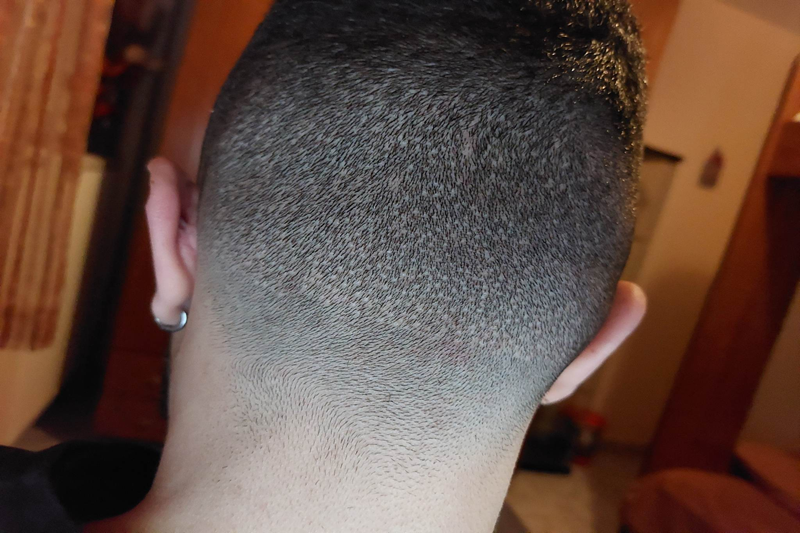
If you are wondering when to buzz cut donor area after a hair transplant, the answer depends on how closely you want the hair cut and how well the donor skin has healed.
A longer clipper guard leaves some hair between the blades and the scalp, whereas a very short buzz cut exposes more of the skin. Although approximately one month is a general reference point for resuming haircuts, it should not be treated as automatic clearance for a close buzz cut.
Before using clippers, consider the following:
- Choose the right length: Leaving more hair can help conceal visible extraction marks or differences in density.
- Check the skin: Avoid clipping over open wounds, persistent scabs, or irritated areas.
- Ask your surgeon: Confirm whether your donor area is ready for clippers and whether a shorter guard is appropriate.
- Avoid rushing: If healing is incomplete, wait rather than attempting to achieve your preferred style immediately.
Patients who have undergone FUT may need to consider the healing of the linear incision, while those who have undergone FUE may need to consider the visibility of individual extraction marks. Your surgeon can provide guidance based on your procedure.
When Can You Shave the Transplanted Area?
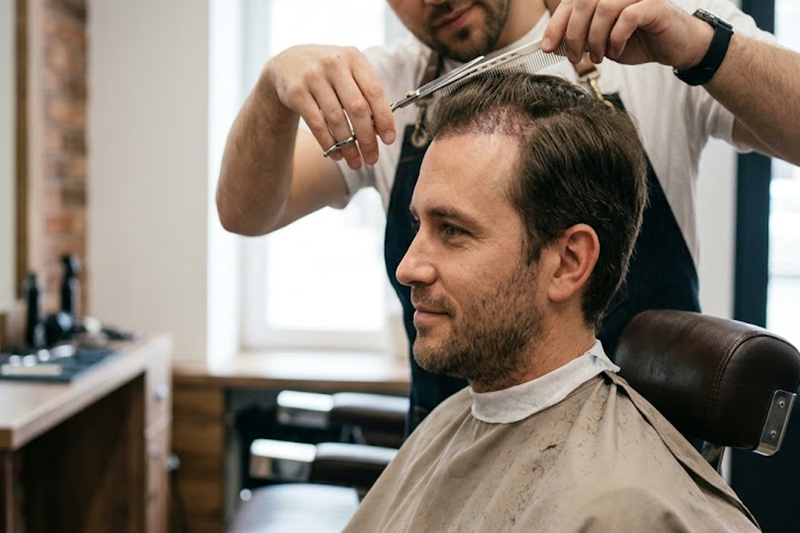
The recipient area requires particular care because it contains the newly implanted grafts. During the initial recovery period, direct pressure, friction, or accidental contact can interfere with healing.
Avoid shaving or running clippers directly over the transplanted area during early recovery. Once the initial healing period has passed, your surgeon can advise whether a gentle trim or closer cut is appropriate.
As a general approach:
- Early recovery: Avoid direct contact with clippers or razors over the grafts.
- After initial healing: Ask whether a careful scissor trim is appropriate.
- Around one month: Discuss whether clippers can be introduced, based on your scalp’s condition.
- Close shaving: Wait for explicit medical clearance before using a razor over the transplanted skin.
The disappearance of scabs alone does not establish that every type of haircut is safe. Follow your surgeon’s instructions even if the scalp looks normal.
Tips for Your First Haircut After Hair Transplant
A few precautions can help make your first haircut more comfortable and reduce unnecessary irritation.
1. Get medical clearance. Ask your surgeon when each area can be trimmed and which tools are appropriate for your recovery.
2. Tell your hairdresser about your procedure. Explain which areas received grafts and which were used for harvesting. This helps prevent unnecessary pressure or friction.
3. Start with a conservative style. Leaving extra length can be a practical choice until your scalp is ready for shorter cuts.
4. Use clean equipment. Ask your hairdresser to use clean tools and avoid dragging clipper blades across sensitive skin.
5. Watch for unusual symptoms. Increasing redness, swelling, pain, bleeding, or discharge should be reported to your surgical team promptly.
Following your personalized aftercare instructions is more important than adhering to a general haircut schedule. For more information about the procedure and recovery, read our guide to hair transplant.
Not sure where to start?
Our specialists will assess your scalp biology, graft capacity, and aesthetic goals to create a hair restoration protocol designed entirely for you — from your first consultation onward.
Frequently Asked Questions
Can I get a haircut two weeks after a hair transplant?
Two weeks may be too early for a full haircut, especially if it involves the transplanted area. Avoid assuming that the scalp is ready for scissors or clippers simply because the initial scabs have disappeared. Ask your surgeon before scheduling a haircut.
Can I use a number one guard after a hair transplant?
A number one guard produces a short cut that brings the clipper blades relatively close to the scalp. Whether it is appropriate depends on the treated area and healing progress. Obtain your surgeon’s approval before using it.
Will cutting my hair damage transplanted grafts?
Cutting the hair shaft does not, by itself, remove a hair follicle. However, premature clipping or shaving may irritate healing skin or disturb the treated area. Wait until your surgeon confirms that the scalp is ready.
Can I shave my donor area bald after FUE?
A close shave may make extraction marks or differences in donor density more visible. Wait until the donor skin has healed and your surgeon confirms that close shaving is suitable.
Does cutting hair make it grow back thicker?
No. Cutting or shaving hair does not change the thickness of the follicle or make transplanted hair grow faster. The blunt ends of freshly cut hair may feel coarser, but this is a cosmetic effect.
Conclusion
The right time for haircuts after a hair transplant depends on the area being trimmed, the tool being used, and your individual recovery. Approximately one month is a useful general guideline, but it does not guarantee that a close buzz cut or razor shave is appropriate for everyone.
Wait for your surgeon’s approval before using clippers or shaving the transplanted area. Taking a gradual approach can help protect healing skin and allow you to return to your preferred hairstyle with greater confidence.
Related Articles
Continue exploring clinical insights from the Helia Medical Journal.
 Blog
Blog
Best Shampoo After Hair Transplant: Don’t Damage Your Grafts
Table of ContentsWhen Can You Wash Your Hair After a Hair Transplant?What Should You Look for in a Shampoo After Hair Transplant?Is Sulfate-Free Shampoo Better After a Hair…
 Blog
Blog
Body Hair Transplant (BHT): Can Beard Hair Grow on the Scalp?
Table of ContentsWhat Is a Body Hair Transplant?Can Beard Hair Grow on the Scalp?Scalp vs Beard vs Body Hair: Key DifferencesWhen Are Chest Hair Grafts Used?Who Is a…
 Blog
Blog
Hair Transplant in Dubai vs Turkey: Quality, Costs & Safety Compared
Choosing between a hair transplant in Dubai and Turkey depends on more than price. Turkey is known for its competitive costs and extensive hair restoration industry, while Dubai offers modern medical facilities, experienced specialists, and easier access to local follow-up care. This guide compares hair transplant costs, quality, safety, techniques, and aftercare in Dubai vs Turkey to help you make a more informed decision.
Comments
Share your questions or clinical experience with our readers.