
Vertex Hair Transplant: What It Takes to Restore the Crown
هل يظهر أعلى رأسك أو خلفه علامات الصلع الذكوري؟ في هذا المقال نشرح كيف تعمل زراعة الشعر لهذه المنطقة وما قد تكلّفه. كما نقدّم نصائح عناية لاحقة أساسية ومعلومات مهمة لضمان أفضل نتائج ممكنة. تعلّم كيف تستعيد شعرك بثقة وعناية.
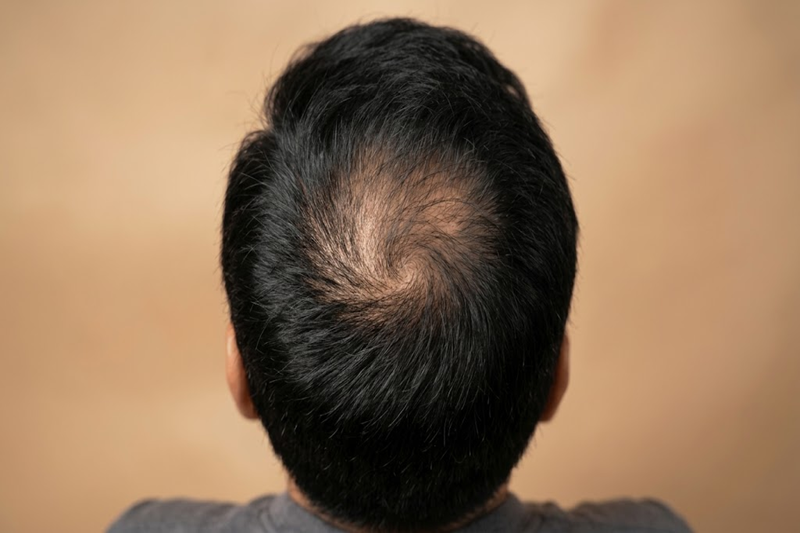
Hair thinning at the crown can gradually make the scalp more visible, even when the surrounding hair remains relatively thick. This area, known as the vertex, has a distinctive circular growth pattern that makes restoration different from treating hair loss along the frontal hairline.
A vertex hair transplant relocates hair follicles from a suitable donor area to the thinning or bald crown. The goal is to improve coverage while following the natural direction of hair growth. However, the results depend on several factors, including donor hair quality, the extent of hair loss, and the availability of healthy follicles.
What Is a Vertex Hair Transplant?
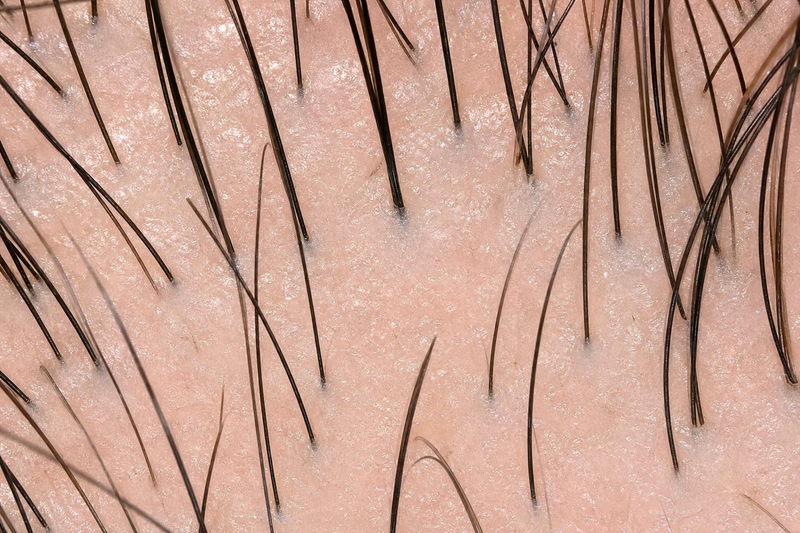
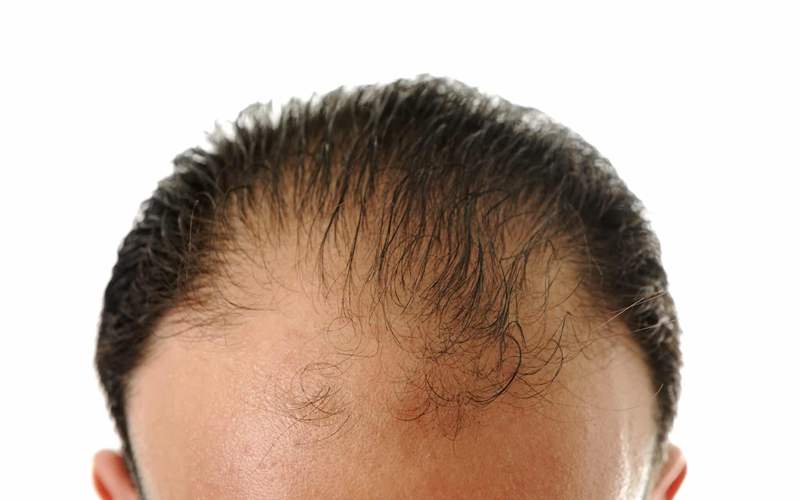
The vertex is the upper-back region of the scalp, commonly called the crown. Hair in this area usually grows in a spiral around a central point. As hair loss progresses, the spaces between strands become more visible, creating a thinning or bald patch.
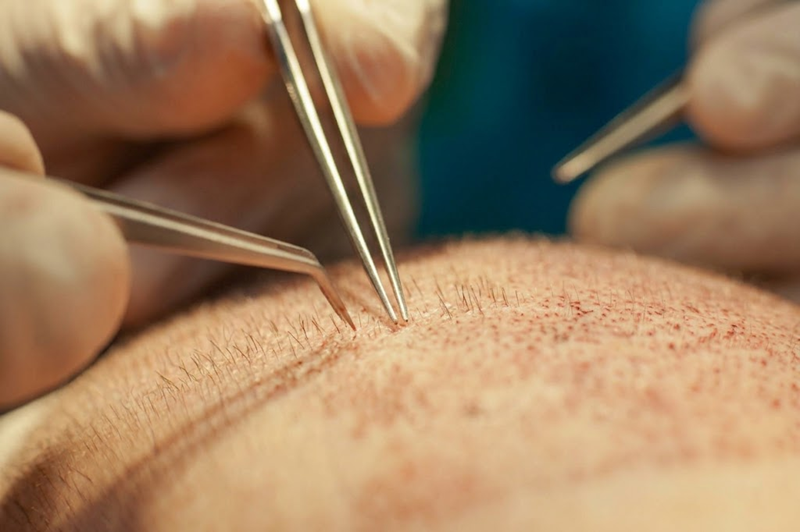
During a vertex hair transplant, a surgeon moves follicular units from a donor area, typically the back or sides of the scalp, to the affected region. These follicles are positioned to complement the existing hair-growth pattern.
Unlike frontal hairline restoration, crown transplantation focuses on recreating the natural swirl and improving coverage across the affected area. The aim is not necessarily to restore the original density but to achieve a fuller, natural-looking appearance within the limits of the available donor hair.
لست متأكدًا من أين تبدأ؟
سيقيّم أخصائيونا بيولوجيا فروة رأسك وسعة الطعوم وأهدافك الجمالية لوضع بروتوكول استعادة شعر مصمم بالكامل لك — منذ استشارتك الأولى فصاعدًا.
Why Is Crown Hair Transplantation Challenging?
Crown restoration requires careful planning because of three main considerations:
- Circular hair growth: The direction and angle of hair change around the central swirl, requiring precise graft placement.
- Treatment area size: Crown thinning can spread gradually, sometimes requiring more grafts than a smaller area of hair loss.
- Limited donor supply: Using too many follicles in the crown may leave fewer available for future procedures if thinning progresses elsewhere.
A successful plan should account for both current hair loss and the possibility of future thinning. The American Academy of Dermatology emphasizes the importance of evaluating candidacy, setting realistic expectations, and understanding that additional hair loss can continue after transplantation.
Who Is a Good Candidate for a Vertex Hair Transplant?
A vertex hair transplant may be suitable for people with permanent pattern hair loss who have sufficient healthy donor hair and a scalp suitable for surgery. However, not every type of hair loss is appropriate for transplantation.
A professional assessment should consider the following factors:
| Factor | Why It Matters |
|---|---|
| نمط تساقط الشعر | Identifies the affected areas and helps guide treatment priorities. |
| Donor hair density | Determines how many suitable follicles may be available. |
| Hair thickness and texture | Influences the visual coverage achievable with each graft. |
| Hair-loss progression | Helps the surgeon plan for potential future thinning. |
| Scalp health | Identifies conditions that may require evaluation before surgery. |
People experiencing rapid or unexplained hair loss may need further medical assessment before considering surgery. Younger patients may also require more cautious planning because their hair-loss pattern can change over time.
A consultation helps determine whether transplantation is appropriate and what degree of improvement is realistic.
Which Techniques Can Restore the Crown?
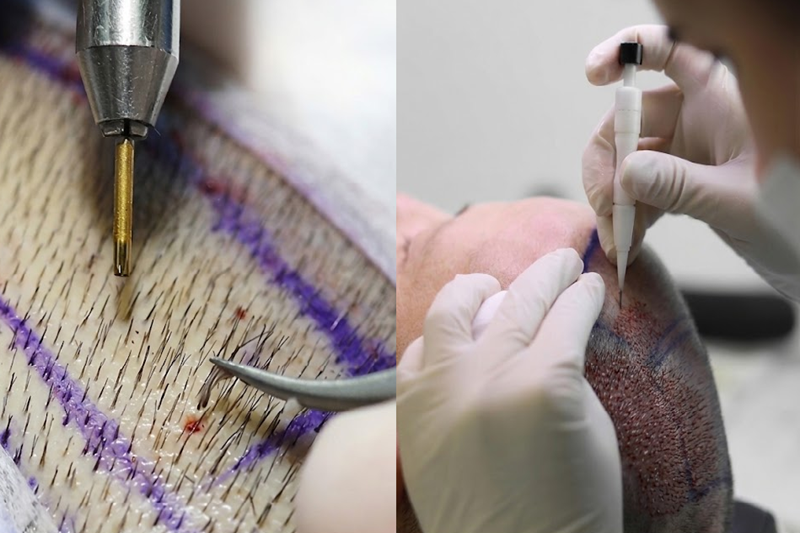
Two commonly used hair transplantation approaches are Follicular Unit Extraction (FUE) and Direct Hair Implantation (DHI).
Follicular Unit Extraction (FUE) involves removing individual follicular units from the donor area and placing them into the recipient area. It avoids the long linear scar associated with strip harvesting, although small extraction scars can remain.
Direct Hair Implantation (DHI) uses an implanter device to place follicular units into the scalp. This approach allows controlled placement, but its suitability depends on the treatment plan and the surgeon’s assessment.
Neither technique is automatically superior for every patient. For crown restoration, the priority is choosing an appropriate approach and placing grafts in directions that follow the natural hair swirl.
At Helia Clinic’s hair transplant service, patients can explore hair restoration options and discuss an approach suited to their individual hair-loss pattern.
How Many Grafts Does Crown Restoration Require?
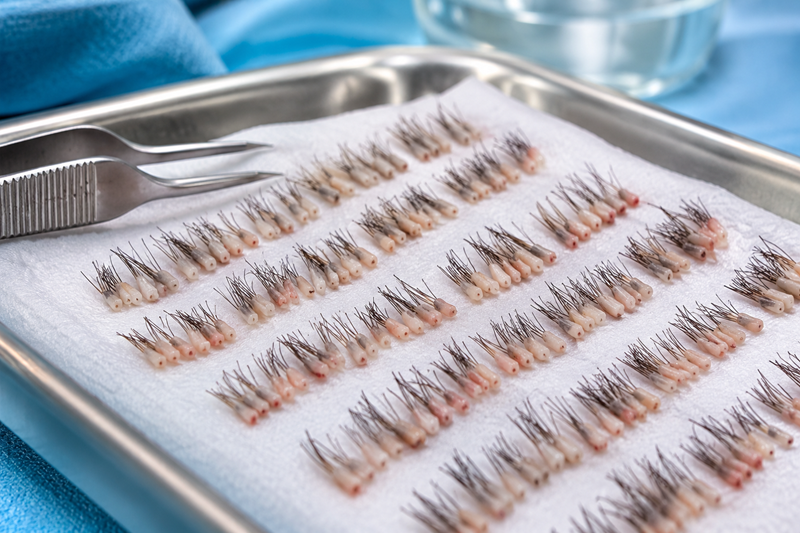
The number of grafts needed for a vertex hair transplant varies according to the size of the affected area and the patient’s hair characteristics. A small thinning crown may require fewer grafts than a large, completely bald region.
Graft planning should consider the available donor supply, existing hair density, hair thickness, and desired coverage. It is also important to distinguish between grafts and individual hairs: one follicular unit can contain multiple hairs.
More grafts do not automatically produce a better result. Careful distribution can improve visual coverage while preserving donor hair for future needs. An individualized assessment is therefore more useful than relying on a fixed graft estimate.
What Happens During a Vertex Hair Transplant?
The procedure generally follows four stages:
- Assessment and planning: The surgeon examines the scalp, evaluates donor hair, and maps the crown’s natural growth pattern.
- Follicle extraction: Suitable follicular units are removed using the selected technique.
- Graft placement: The follicles are implanted according to the planned distribution, angles, and directions.
- Aftercare: The patient receives instructions for scalp washing, activity restrictions, and follow-up appointments.
Following postoperative instructions is particularly important during early healing, when the transplanted grafts need protection. The exact care routine depends on the procedure and the treating surgeon’s guidance.
Vertex Hair Transplant Recovery and Results
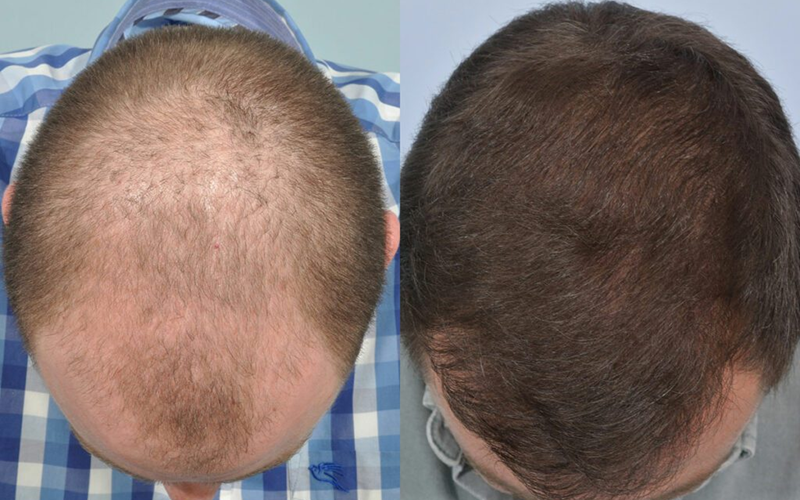
Hair restoration takes time. Transplanted hair shafts commonly shed during the first several weeks, and new growth develops gradually. This temporary shedding does not necessarily mean the transplant has failed.
| Approximate Timeline | ما الذي تتوقعه |
|---|---|
| First ١–٢ weeks | Scabbing, redness, or swelling may occur as the scalp heals. |
| Weeks ٢–٨ | Transplanted hair shafts may shed temporarily. |
| Months ٣–٤ | Early new growth may become visible. |
| Months ٦–٩ | Improvement in coverage often becomes more noticeable. |
| Months ١٢–١٨ | Further growth and maturation may continue. |
These timelines are estimates, not guarantees. Individual healing and growth vary, and the crown may take longer to show its full cosmetic result.
Increasing pain, spreading redness, fever, or other unexpected symptoms should be reported to the treating medical team.
How Can Natural-Looking Results Be Achieved?
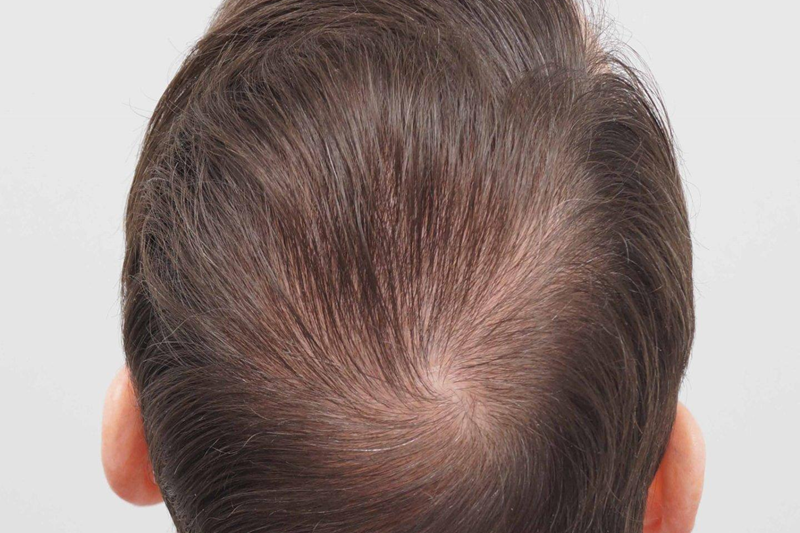
Natural-looking crown restoration depends on more than the number of implanted grafts. The surgeon must consider the direction of existing hair, the shape of the swirl, and how transplanted follicles will blend with surrounding strands.
Grafts should be distributed according to the affected area’s size and the available donor supply. Hair thickness, texture, and contrast with the scalp also influence the appearance of density.
Future hair loss matters, too. Transplanted follicles may continue to grow, but untreated hair around them can become thinner over time. Depending on the cause of hair loss, a medical professional may recommend appropriate treatments to help manage ongoing thinning. These decisions should be individualized rather than based on a universal treatment plan.
لست متأكدًا من أين تبدأ؟
سيقيّم أخصائيونا بيولوجيا فروة رأسك وسعة الطعوم وأهدافك الجمالية لوضع بروتوكول استعادة شعر مصمم بالكامل لك — منذ استشارتك الأولى فصاعدًا.
الأسئلة الشائعة
Is a vertex hair transplant more difficult than a hairline transplant?
The procedures have different challenges. Crown restoration requires careful placement around a circular growth pattern, while hairline transplantation focuses on creating a natural-looking transition along the forehead.
Can one session restore the entire crown?
Some patients achieve their desired improvement in one session, while others may need additional treatment. The decision depends on the affected area, donor capacity, and realistic coverage goals.
Does transplanted crown hair fall out permanently?
Temporary shedding of transplanted hair shafts is common during early recovery. However, individual outcomes vary, and surrounding untreated hair may continue to thin.
When can I see the final results?
Visible improvement often develops over several months. Crown results may continue maturing for ١٢–١٨ months, depending on individual growth and healing.
Conclusion
A vertex hair transplant can improve crown coverage when planned around the natural hair-growth pattern, available donor hair, and the extent of hair loss. Because the crown may continue to thin over time, choosing the right technique and setting realistic expectations are essential for achieving natural-looking results.
مقالات ذات صلة
واصل استكشاف الرؤى السريرية من المجلة الطبية لهليا.
 استعادة وزراعة الشعر
Warning: Undefined array key 0 in /home/u257547261/domains/helia.clinic/public_html/wp-content/themes/helia-clinic/single.php on line 461
٠ ٠ • ٧ دقيقة قراءة
هل تدوم زراعة الشعر للأبد؟ أي تقنية تدوم أطول؟
Hair transplants are a popular long-term solution for people experiencing hair loss. However, one common question is whether transplanted hair lasts forever and which technique offers the most durable results. In many cases, transplanted hair can continue growing for decades…
 استعادة وزراعة الشعر
Warning: Undefined array key 0 in /home/u257547261/domains/helia.clinic/public_html/wp-content/themes/helia-clinic/single.php on line 461
٠ ٠ • ٧ دقيقة قراءة
توقعات زراعة الشعر: ما الحقيقي وما غير الحقيقي؟
Hair transplant results develop gradually, and the outcome may differ from what you initially expect. Factors such as donor hair quality, the extent of hair loss, and individual healing all influence the final appearance. Understanding Hair Transplant Expectations can help…
 استعادة وزراعة الشعر
Warning: Undefined array key 0 in /home/u257547261/domains/helia.clinic/public_html/wp-content/themes/helia-clinic/single.php on line 461
٠ ٠ • ٦ دقيقة قراءة
Wearing Hat After Hair Transplant: When Is It Safe?
After a hair transplant, protecting the newly transplanted grafts is an important part of recovery. Hats can be useful for sun and dust protection, but wearing the wrong type too early may cause pressure or friction around the grafts. So,…
التعليقات
شارك أسئلتك أو تجربتك السريرية مع قرائنا.