
PRP vs G-Cell vs Exosomes: Which One Really Works?



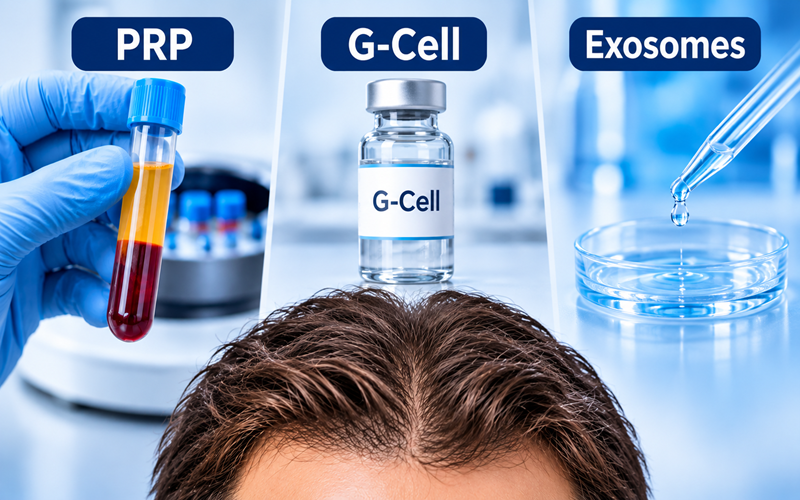
Hair loss treatments have evolved beyond traditional approaches, with regenerative procedures offering new ways to support existing hair follicles. PRP, G-Cell, and exosome therapy are three options that target hair thinning through different biological processes.
But which one delivers better results? Understanding their differences, clinical evidence, and limitations can help patients make informed decisions about hair restoration.
What Are PRP, G-Cell, and Exosome Hair Treatments?
Although all three treatments aim to support hair follicle activity, they use different biological materials and preparation methods.
علاج الشعر بالبلازما بي آر بي
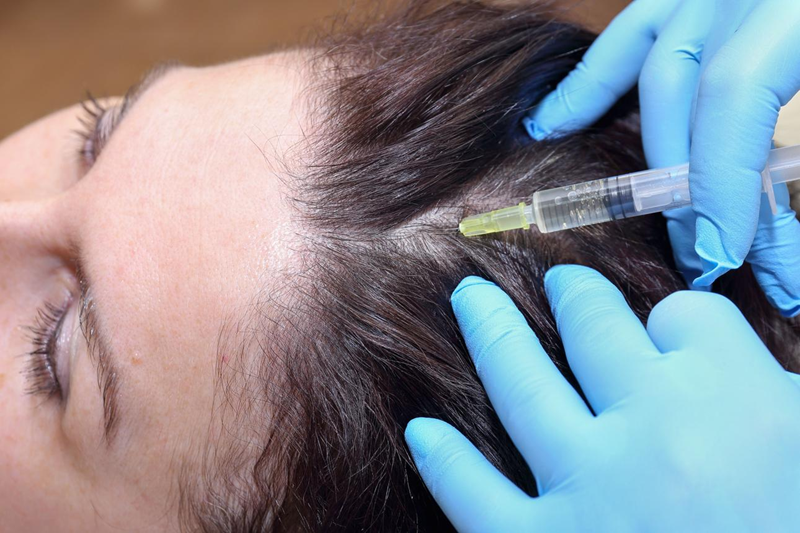
Platelet-Rich Plasma (PRP) is prepared from the patient’s own blood. A small blood sample is collected and processed using a centrifuge to separate platelet-rich plasma from other blood components.
Platelets contain growth factors involved in tissue repair and cellular signaling. When injected into selected areas of the scalp, PRP may support follicular activity and improve hair density in suitable patients.
PRP is commonly used for androgenetic alopecia, particularly when hair follicles are still active but producing thinner strands.
Learn more about PRP hair treatment at Helia Clinic.
علاج الشعر بـ G-Cell
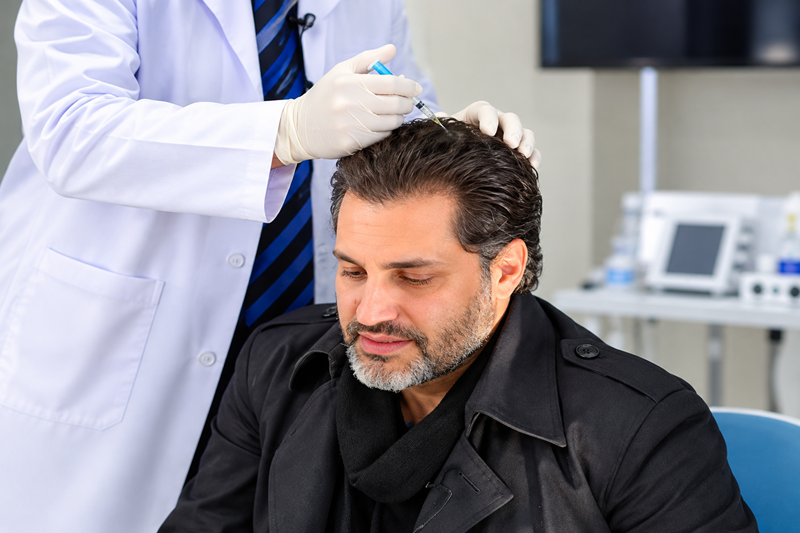
G-Cell uses autologous micrografting technology to support hair follicle health. The procedure involves collecting a small tissue sample from the patient’s scalp and processing it mechanically using specialized equipment, such as the Rigenera system.
This process produces a suspension containing tissue-derived cellular components and micrografts, which are applied to selected scalp areas.
Unlike PRP, G-Cell does not rely on platelet concentration. It uses a different approach to support existing follicles and improve the scalp environment.
Importantly, G-Cell should not automatically be described as conventional stem cell therapy, as its preparation method and biological components are different.
Explore G-Cell hair treatment to learn more.
Exosome Hair Treatment
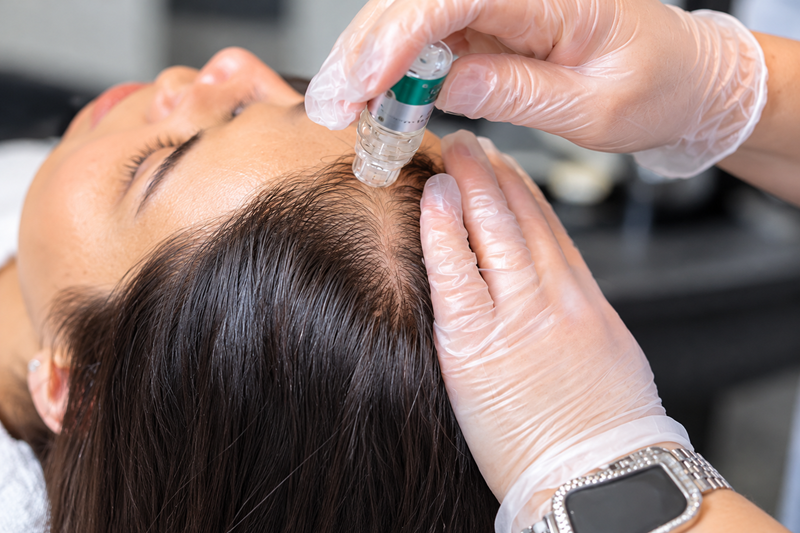
Exosomes are microscopic extracellular vesicles released by cells. They carry biological signals, including proteins, lipids, and genetic material, that help cells communicate.
In hair restoration, researchers are investigating their potential to influence follicular activity, cellular signaling, and processes involved in hair growth.
Unlike PRP and G-Cell, exosome therapy uses prepared extracellular vesicle products. Their source, composition, and manufacturing methods can vary.
Explore Exosome hair therapy at Helia Clinic to learn more about this emerging approach to hair restoration.
لست متأكدًا من أين تبدأ؟
سيقيم متخصصونا بيولوجيا فروة رأسك، وسعة الطعوم، وأهدافك الجمالية لوضع بروتوكول استعادة شعر مصمم خصيصًا لك — بدءًا من استشارتك الأولى فصاعدًا.
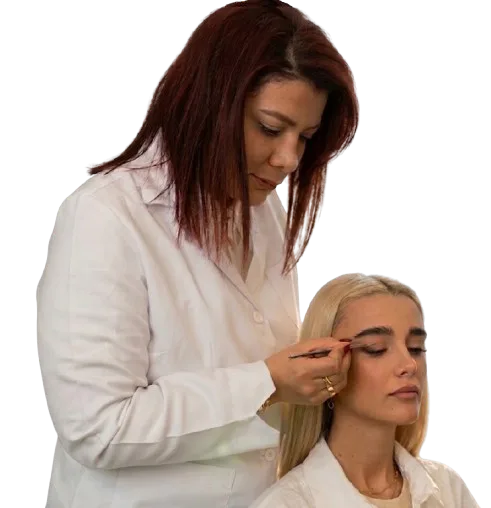
PRP vs G-Cell vs Exosomes: Key Differences
The main differences involve the biological source, preparation method, and amount of clinical research available for each treatment.
| الميزة | PRP | G-Cell | Exosomes |
|---|---|---|---|
| Source | Patient’s blood | Patient’s scalp tissue | Prepared extracellular vesicles |
| التحضير | Centrifugation | Mechanical micrografting | Specialized processing |
| Main Components | Platelets and growth factors | Tissue-derived cellular components | Cell-signaling molecules |
| Main Purpose | Support follicular activity | Support existing follicles | Influence cellular signaling |
| Clinical Evidence | More extensive | Limited | Emerging |
| Treatment Approach | Scalp injections | Micrograft application | Depends on product and protocol |
These differences do not automatically determine which treatment is more effective. Patient suitability and the quality of clinical evidence are equally important.
PRP vs G-Cell vs Exosomes: Which Is More Effective?
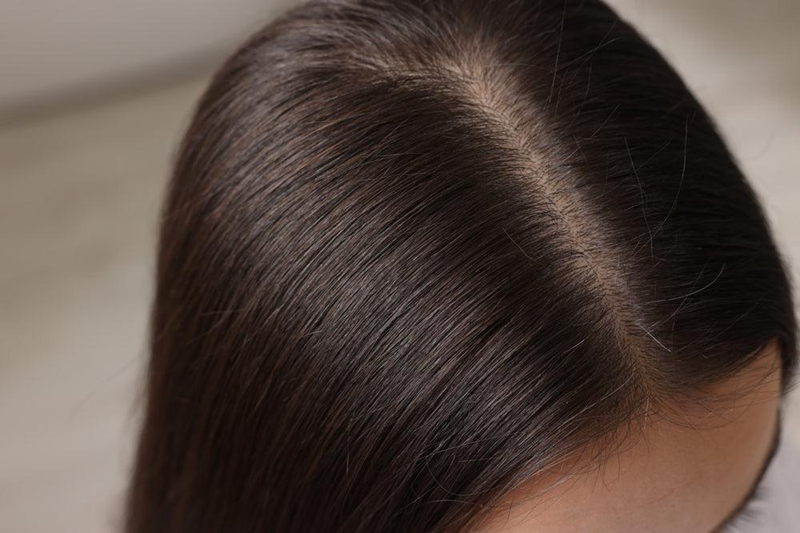
There is currently insufficient high-quality comparative research to establish one treatment as the best option for every patient. However, the available evidence provides some useful distinctions.
PRP: The More Established Option
PRP has a larger clinical research background than G-Cell and exosome therapy for androgenetic alopecia. Clinical studies have investigated its potential to improve hair density and thickness, although results vary depending on preparation methods, treatment schedules, and patient characteristics.
G-Cell: An Alternative Micrografting Approach
G-Cell offers a different approach by using mechanically processed autologous tissue rather than isolated platelets.
Early research into autologous micrografting is encouraging, but the number of high-quality studies specifically establishing its effectiveness for hair loss remains limited.
Therefore, its potential benefits should be considered alongside the current gaps in clinical evidence.
Exosomes: A Promising but Emerging Treatment
Exosome therapy has attracted attention because of its potential role in cellular communication and regenerative processes.
A ٢٠٢٥ systematic review examined ١١ clinical studies investigating exosome-based hair treatments. Although several studies reported improvements in hair density and thickness, differences in product sources, study designs, and follow-up periods limited direct comparisons.
Consequently, exosomes should be considered an emerging treatment rather than a clinically proven replacement for PRP.
For further scientific detail, see the ٢٠٢٥ systematic review of exosomes and hair regeneration.
What Factors Determine the Right Hair Treatment?
Choosing between PRP, G-Cell, and exosomes requires an assessment of the underlying cause and stage of hair loss.
The following factors are particularly important:
- Cause of hair loss: Androgenetic alopecia, hormonal changes, nutritional deficiencies, and medical conditions require different treatment approaches.
- Follicle condition: Regenerative procedures are primarily intended to support existing follicles. They cannot reliably restore hair in areas where follicles have been permanently lost.
- Clinical evidence: Treatments with stronger human research provide a more reliable basis for discussing potential outcomes.
- Treatment quality: Preparation methods, product characteristics, and application protocols can influence treatment outcomes.
- Individual expectations: Hair density, thickness, and the possibility of maintaining results should be discussed before treatment.
أفكار ختامية
When comparing PRP vs G-Cell vs Exosomes, the most important difference is their clinical evidence and biological approach. PRP currently has the strongest research background, G-Cell offers an alternative autologous micrografting technique, and exosomes represent an emerging area of hair restoration research.
No single treatment is suitable for everyone. The right choice depends on the cause of hair loss, follicle condition, and individual treatment goals. A professional assessment can help identify an appropriate approach based on realistic expectations and available clinical evidence.
لست متأكدًا من أين تبدأ؟
سيقيم متخصصونا بيولوجيا فروة رأسك، وسعة الطعوم، وأهدافك الجمالية لوضع بروتوكول استعادة شعر مصمم خصيصًا لك — بدءًا من استشارتك الأولى فصاعدًا.
الأسئلة الشائعة
Is G-Cell better than PRP for hair loss?
There is not enough direct comparative evidence to establish that G-Cell is more effective than PRP. PRP currently has a more extensive clinical research background for androgenetic alopecia.
Are exosomes more effective than PRP?
Current evidence does not establish that exosomes are more effective than PRP. Although early clinical studies show promising results, further controlled research is needed.
How long does it take to see results from these treatments?
Results depend on the treatment method, hair loss condition, and individual response. PRP outcomes are generally assessed over several months. Reliable timelines for G-Cell and exosome therapy have not yet been established.
Can these treatments regrow hair in completely bald areas?
These procedures are primarily intended to support existing follicles. They cannot reliably regenerate follicles that have been permanently lost. Hair transplantation may be a more appropriate option for suitable patients with established bald areas.
مقالات ذات صلة
واصل استكشاف الرؤى السريرية من المجلة الطبية لهليا.
 استعادة وزراعة الشعر
Warning: Undefined array key 0 in /home/u257547261/domains/helia.clinic/public_html/wp-content/themes/helia-clinic/single.php on line 456
٠ ٠ • ٨ دقيقة قراءة
Donor Hair From Another Person: Is It Possible?
People experiencing advanced hair loss may wonder whether a family member, partner, or friend can donate hair follicles for transplantation. This question is particularly relevant when the patient's own donor area cannot provide enough grafts to achieve the desired coverage.…
 استعادة وزراعة الشعر
Warning: Undefined array key 0 in /home/u257547261/domains/helia.clinic/public_html/wp-content/themes/helia-clinic/single.php on line 456
٠ ٠ • ٧ دقيقة قراءة
هل تدوم زراعة الشعر للأبد؟ أي تقنية تدوم أطول؟
Hair transplants are a popular long-term solution for people experiencing hair loss. However, one common question is whether transplanted hair lasts forever and which technique offers the most durable results. In many cases, transplanted hair can continue growing for decades…
 استعادة وزراعة الشعر
Warning: Undefined array key 0 in /home/u257547261/domains/helia.clinic/public_html/wp-content/themes/helia-clinic/single.php on line 456
٠ ٠ • ٧ دقيقة قراءة
توقعات زراعة الشعر: ما الحقيقي وما غير الحقيقي؟
Hair transplant results develop gradually, and the outcome may differ from what you initially expect. Factors such as donor hair quality, the extent of hair loss, and individual healing all influence the final appearance. Understanding Hair Transplant Expectations can help…
التعليقات
شارك أسئلتك أو تجربتك السريرية مع قرائنا.