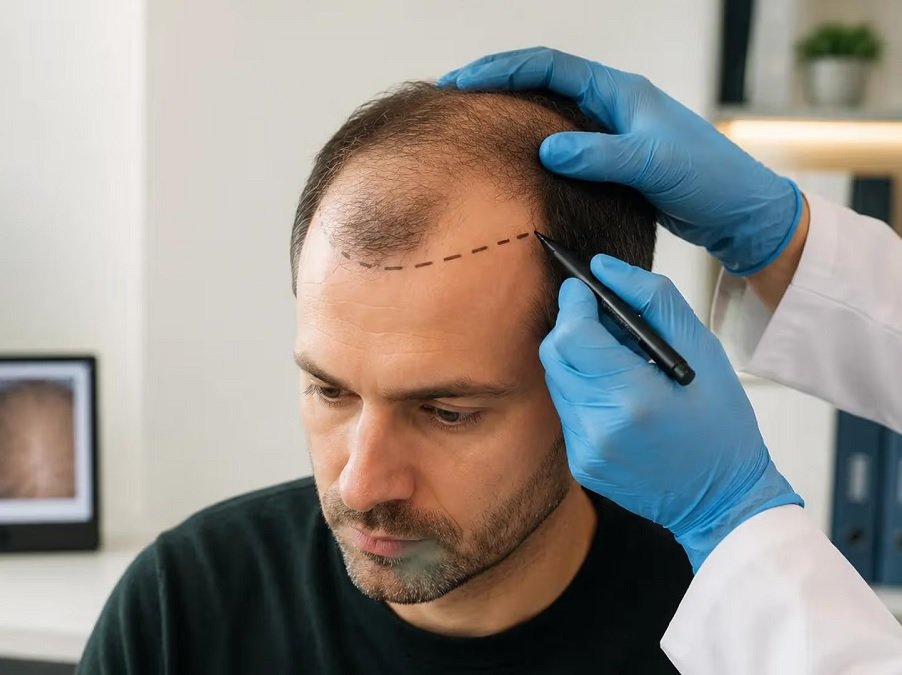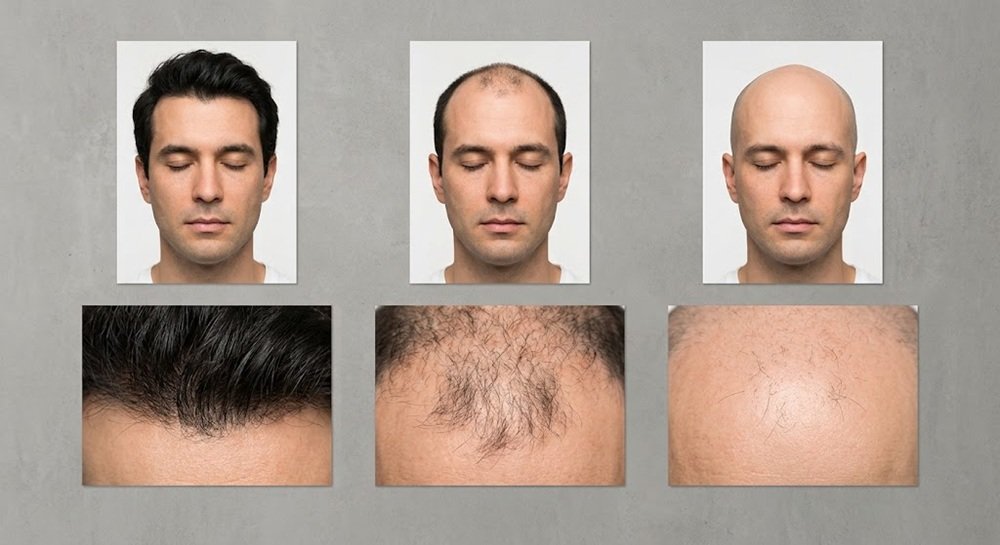

Hair transplantation is not simply about moving as many grafts as possible. The goal is to restore a natural-looking appearance while using the donor hair strategically and preserving enough follicles for the future.
So, how many hair grafts do you need? The answer depends on several factors, including the extent of hair loss, your Norwood stage, the size of the recipient area, donor hair density, hair characteristics, and the level of coverage you want.
A person with early frontal recession may need around 1,500–2,000 grafts, while someone with more extensive hair loss may require 3,000–4,000 or more. However, these numbers are only general estimates. Your exact graft requirement can only be determined after assessing your hair loss pattern and donor area.
What Is a Hair Graft?
Before estimating the number of grafts you may need, it is important to understand what a graft actually means.
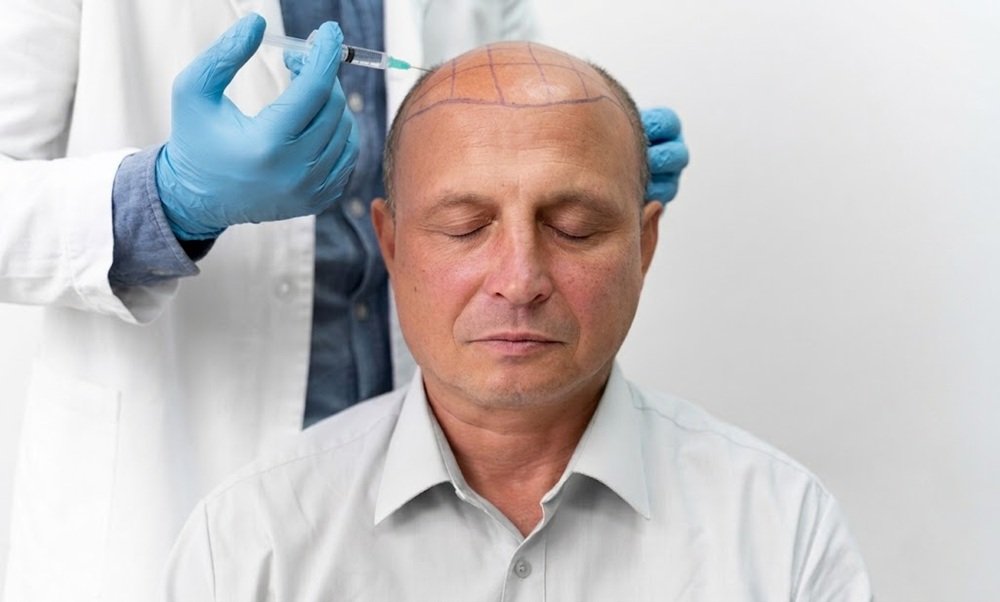
A hair graft is a small unit of tissue containing one or more hair follicles. Depending on the individual, a graft may contain one, two, three, or sometimes more hairs.
This means that grafts and hairs are not the same thing.
For example, 2,000 grafts could contain considerably more than 2,000 individual hairs. The average number of hairs per graft varies between individuals and can influence the overall visual density achieved during a transplant.
This is one reason why simply comparing the number of grafts between two patients does not necessarily tell you which person will achieve a denser result.
How Many Hair Grafts Do You Need?
There is no single graft number that is ideal for everyone.
The number of grafts required is primarily determined by the size of the area being treated and the amount of density needed to create a natural appearance.
As a general guide:
| Hair Loss Pattern | Approximate Graft Range* |
|---|---|
| Minor hairline or temple recession | 1,000–1,500 |
| Moderate frontal thinning | 1,500–2,500 |
| Frontal and mid-scalp restoration | 2,000–3,500 |
| Extensive frontal, mid-scalp, and crown loss | 3,000–4,500+ |
*These figures are general estimates, not a prescription or a fixed treatment plan. Individual requirements can vary significantly.
A patient with thick hair and a high number of hairs per graft may achieve satisfactory coverage with fewer grafts than someone with finer hair and lower donor density.
The goal should therefore be appropriate graft distribution, rather than simply choosing the largest possible number.
Hair Graft Calculator: How Can You Estimate Your Graft Needs?
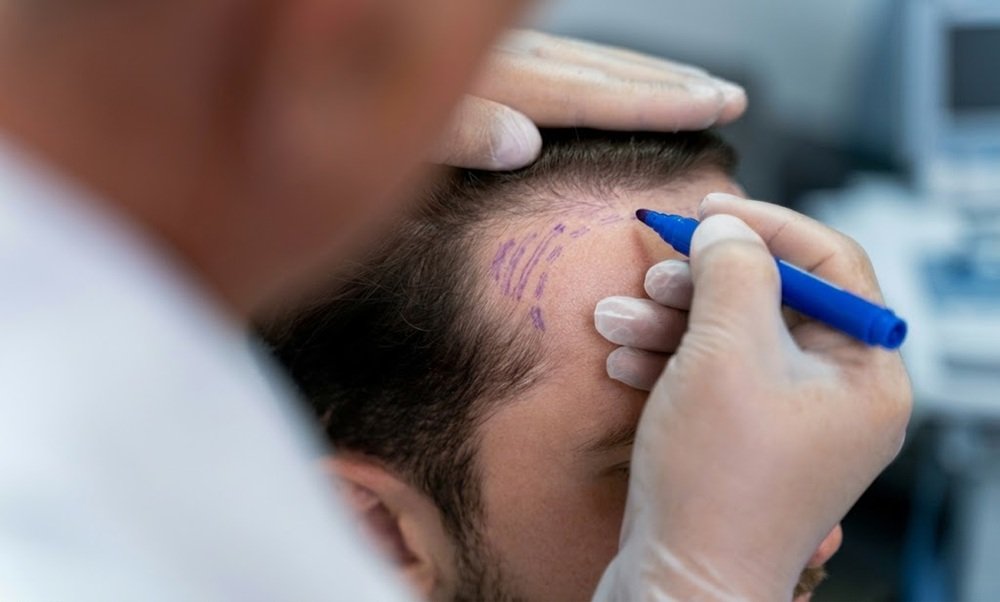
A hair graft calculator can provide a useful initial estimate, particularly when comparing different treatment areas.
A simplified way to think about graft requirements is:
Estimated grafts = recipient area × target graft density
However, this calculation is only a starting point. A real treatment plan needs to account for factors such as:
- The size of the bald or thinning area
- Desired density
- Existing hair density
- Hair thickness
- Hair texture and curl
- Number of hairs per graft
- Donor hair availability
- Hairline design
- Current and future hair loss
- Whether the crown, frontal scalp, or mid-scalp is being treated
For this reason, an online hair graft calculator should not be treated as a substitute for an individual hair assessment.
Two people with the same Norwood stage can require very different numbers of grafts.
Norwood Scale Graft Count: How Does Hair Loss Stage Affect Graft Needs?
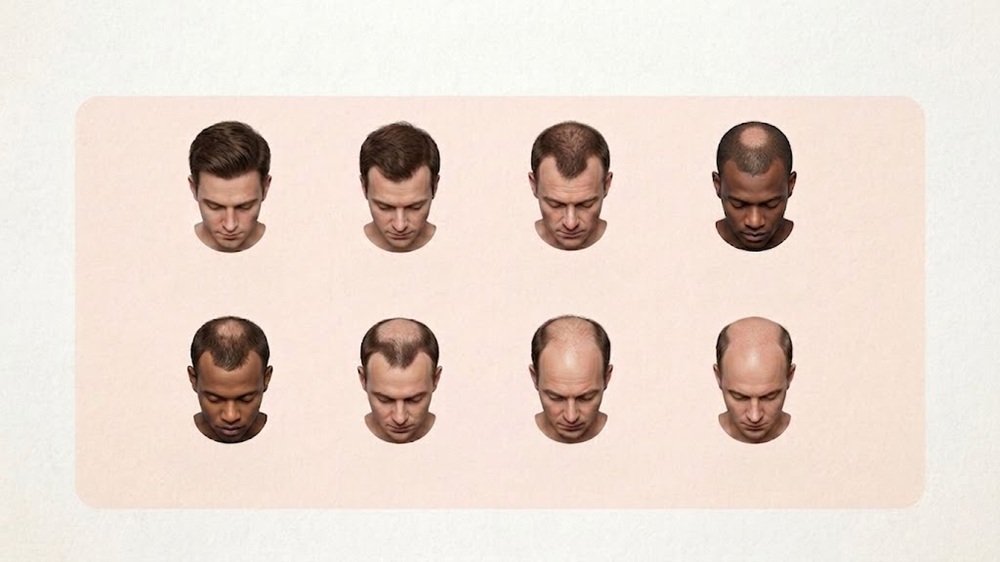
The Norwood Scale, also known as the Norwood-Hamilton Scale, is commonly used to describe the progression of male pattern hair loss.
It ranges from relatively minimal recession to extensive hair loss across the frontal scalp, mid-scalp, and crown.
Norwood Stage I
At Stage I, there is little or no significant hair loss. A hair transplant is generally not necessary unless there is a specific concern such as an unusually high or irregular hairline.
Norwood Stage II
Stage II typically involves mild recession around the temples and hairline.
If transplantation is considered, the treatment may focus primarily on rebuilding or refining the frontal hairline and temples.
Norwood Stage III
At Stage III, temple recession becomes more pronounced and the frontal hairline is more clearly affected.
Some patients may require approximately 1,500–2,500 grafts, depending on the size of the area and desired density.
Norwood Stage IV
Stage IV involves more significant frontal loss and may also include crown thinning.
Depending on the treatment plan, restoration may require approximately 2,000–3,500 grafts or more.
Norwood Stage V
At Stage V, the frontal and crown areas become more extensive, with a narrower band of hair separating them.
A larger number of grafts may be required, but donor capacity becomes particularly important when planning treatment at this stage.
Norwood Stage VI
Stage VI represents extensive hair loss across the frontal and crown regions, with limited remaining hair between them.
Restoration can require a substantial number of grafts and may need to be approached strategically, especially when donor supply is limited.
Norwood Stage VII
Stage VII represents the most advanced pattern of male pattern hair loss.
Because the donor area may not provide enough follicles to recreate the density of a full head of hair, treatment goals must be realistic and carefully prioritized.
Does the Norwood Stage Determine the Exact Graft Count?
No.
The Norwood stage helps describe the pattern and severity of hair loss, but it does not automatically determine the number of grafts required.
The size of the recipient area, donor density, hair characteristics, desired density, and treatment priorities all need to be considered.
2000 Grafts vs 4000 Grafts: What’s the Difference?
The difference between 2000 grafts vs 4000 grafts is not simply that 4000 grafts will produce twice as good a result.
The number reflects the amount of follicular units being transplanted and, in many cases, the size of the area being treated.
2000 Grafts
Around 2,000 grafts may be considered when the goal is to treat a relatively limited area, such as:
- Receding temples
- A moderately affected hairline
- The frontal scalp
- A smaller area of thinning
The exact result will depend on graft characteristics and the density required.
4000 Grafts
Around 4,000 grafts may be considered for more extensive hair loss involving a larger portion of the scalp.
For example, treatment may involve the:
- Hairline
- Frontal scalp
- Mid-scalp
- Crown
However, not every patient is a suitable candidate for 4,000 grafts.
The donor area must contain enough healthy follicles to support the procedure without unnecessarily depleting the available donor supply.
2000 vs 4000 Grafts at a Glance
| Factor | 2,000 Grafts | 4,000 Grafts |
|---|---|---|
| Treatment area | Usually more limited | Usually more extensive |
| Donor requirement | Lower | Higher |
| Potential coverage | Smaller area | Larger area |
| Procedure planning | Often simpler | Requires greater planning |
| Suitable for everyone? | No | No |
The important question is therefore not “How many grafts can I get?” but rather “How many grafts do I actually need?”
What Factors Determine How Many Grafts You Need?
Several factors influence the final graft count.
1. Size of the Recipient Area
The larger the area that needs coverage, the more grafts may be required.
Restoring a small receding hairline is fundamentally different from reconstructing the hairline, frontal scalp, mid-scalp, and crown.
2. Norwood Stage
A more advanced Norwood stage often means a larger area of hair loss.
However, Norwood stage should be considered a starting point rather than a precise graft calculator.
3. Donor Hair Density
Your donor area is one of the most important limitations in hair transplantation.
If donor density is high, more follicles may be available for transplantation. If donor density is low, the treatment plan may need to prioritize the areas that will have the greatest visual impact.
4. Hair Thickness
Thicker individual hairs can provide greater visual coverage than very fine hairs.
This means two people receiving the same number of grafts may not achieve exactly the same visual density.
5. Number of Hairs per Graft
Grafts can contain different numbers of hairs.
A patient with a higher average number of hairs per graft may achieve greater coverage from the same graft count.
6. Hair Characteristics
Hair texture can influence how dense the transplanted area appears.
For example, wavy or curly hair may provide more visual coverage than very straight, fine hair even when the number of grafts is similar.
7. Desired Density
Not every patient wants or needs the same density.
Some people primarily want to recreate a natural-looking hairline, while others may prioritize greater coverage of a larger thinning area.
8. Future Hair Loss
This is an important consideration, particularly for younger patients.
If native hair continues to thin after transplantation, the appearance of the transplanted area may change over time. A responsible treatment plan therefore considers not only current hair loss but also the possibility of future progression.
9. Previous Hair Transplants
Patients who have undergone previous procedures may have a different donor supply and different planning requirements.
The condition of the donor area and the number of previously harvested grafts can influence what is safely available for another procedure.
How Many Grafts Are Needed for Different Areas?
The number of grafts required can also be considered according to the area being treated.
| Treatment Area | What Influences Graft Requirements? |
|---|---|
| Hairline | Width, shape, recession, and desired density |
| Temples | Degree of recession and facial proportions |
| Frontal scalp | Size of thinning area and target density |
| Mid-scalp | Extent of thinning and existing hair |
| Crown | Size and shape of the thinning area |
| Multiple areas | Overall hair loss, donor supply, and treatment priorities |
There is no universal number for each area because scalp size and hair characteristics vary considerably from person to person.
A natural hair transplant also requires strategic placement. The hairline may need finer grafts and careful angulation, while greater density can sometimes be created farther behind the hairline.
Can You Get 4,000 Grafts in One Hair Transplant?
In some patients, a large graft session may be possible. In others, it may not be appropriate.
The decision depends on factors such as:
- Donor hair density
- Donor area size
- Hair quality
- Recipient area size
- Surgical approach
- Previous procedures
- Overall treatment goals
Harvesting more grafts than the donor area can reasonably support may lead to unnecessary donor depletion.
This is why a high graft count should never be considered a guarantee of a better result.
Why More Grafts Don’t Always Mean a Better Result
It is easy to assume that more grafts = more hair = better result.
In reality, hair transplantation is more complicated.
A successful result depends on factors such as:
- Natural hairline design
- Appropriate graft selection
- Graft placement
- Hair direction and angle
- Distribution of density
- Donor management
- Graft survival
- Long-term planning
Using too many grafts in one procedure may not be appropriate if the donor area cannot support that level of harvesting.
In many cases, using the right number of grafts strategically is more important than using the maximum possible number.
Should You Prioritize the Hairline or the Crown?
When donor supply is limited, treatment priorities become particularly important.
The hairline and frontal scalp are often highly visible, so restoring these areas may create a significant change in overall appearance.
The crown can also be treated, but the amount of grafts required depends heavily on its size and pattern of thinning.
A treatment plan may therefore prioritize certain areas rather than attempting to cover the entire scalp at once.
The best approach depends on your individual pattern of hair loss, donor availability, and long-term goals.
Can a Hair Graft Calculator Tell You Your Exact Number?
Not by itself.
An online calculator can help you understand how recipient area and target density affect graft requirements, but it cannot fully evaluate:
- Donor density
- Hair caliber
- Hair-to-graft ratio
- Donor quality
- Future hair loss
- Hairline design
- Previous transplantation
- Individual facial proportions
Therefore, a calculator should be viewed as an educational estimation tool, not a definitive treatment recommendation.
How to Know Your Exact Graft Requirement
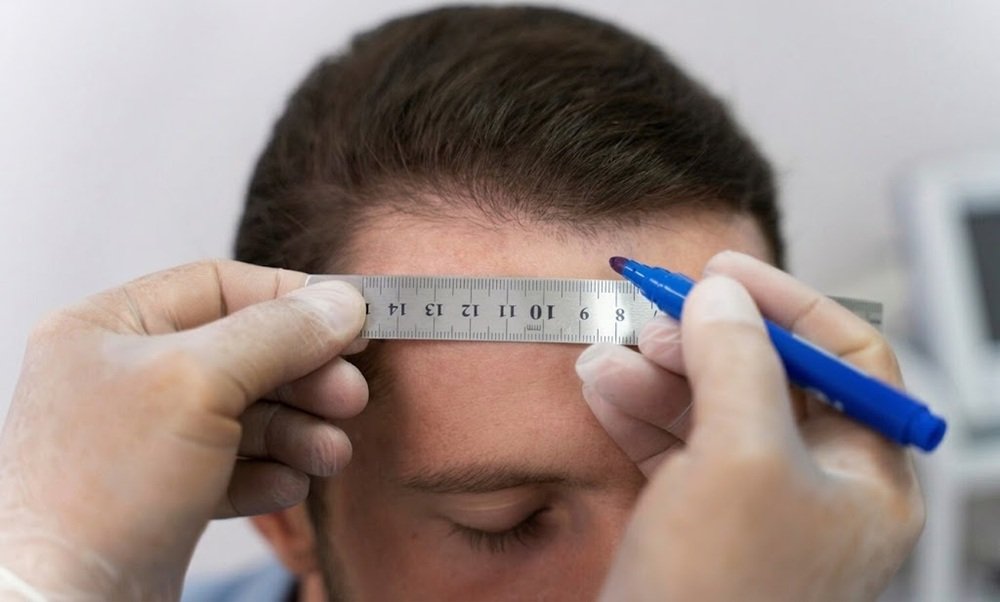
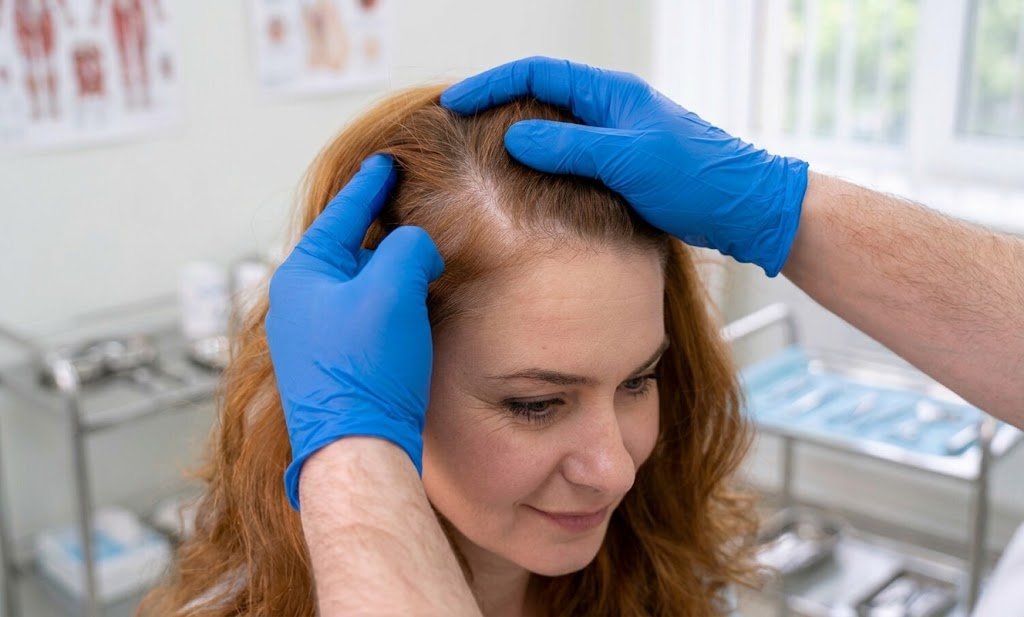
The most reliable way to determine how many hair grafts you need is through an individual assessment.
A specialist can evaluate your:
- Norwood stage
- Recipient area
- Donor density
- Hair thickness
- Hair-to-graft ratio
- Current pattern of hair loss
- Potential future hair loss
- Desired coverage and density
At Helia Clinic, hair transplant planning can be tailored to the individual’s hair loss pattern, donor availability, and restoration goals rather than relying on a standard graft number.
If you are considering treatment in the UAE, an individual assessment can help determine whether you need a smaller procedure focused on the hairline or a more comprehensive restoration plan.
Frequently Asked Questions
How many hair grafts do I need?
The number depends on the extent of hair loss, recipient area, donor density, hair characteristics, desired density, and future hair loss. A smaller area may require around 1,000–2,000 grafts, while more extensive hair loss may require 3,000–4,500 or more.
Is 2,000 grafts enough for a hair transplant?
It can be enough for some patients, particularly when treating a relatively limited area such as the hairline or frontal scalp. However, 2,000 grafts may not provide sufficient coverage for extensive hair loss.
Is 4,000 grafts a lot?
Yes, 4,000 grafts represents a substantial number of grafts and may be considered for more extensive hair loss. Whether it is appropriate depends on the patient’s donor supply and treatment area.
How do I calculate how many grafts I need?
A basic estimate can consider the size of the recipient area and the target graft density. However, an accurate graft count also requires assessment of donor density, hair characteristics, desired coverage, and future hair loss.
Does the Norwood scale determine graft count?
No. The Norwood scale describes the pattern and progression of male pattern hair loss, but it does not provide an exact graft count. Two people at the same Norwood stage may require different numbers of grafts.
Can 4,000 grafts cover the whole scalp?
Not necessarily. Coverage depends on the size of the bald area, the patient’s donor supply, graft characteristics, and the density being targeted. Extensive hair loss may require prioritizing certain areas rather than attempting full high-density coverage.
Are more hair grafts always better?
No. The goal is to use an appropriate number of grafts strategically while preserving the donor area. Graft quality, placement, density distribution, and long-term planning are also important.